.webp)

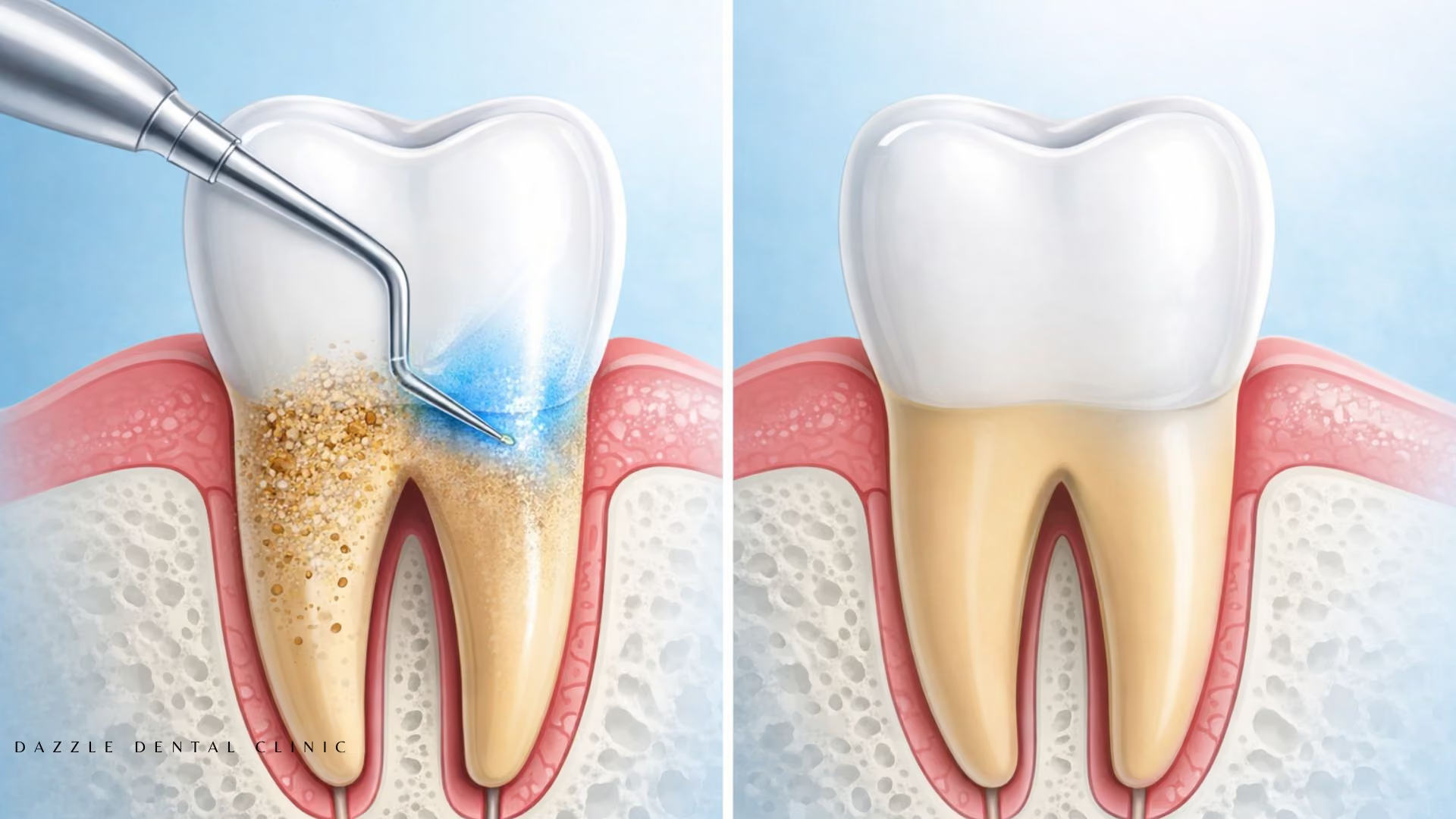
Professional dental cleaning — or prophylaxis — removes calculus (tartar) from tooth surfaces above and below the gum line that home brushing and flossing cannot dislodge. Calculus is mineralised plaque: plaque that was not removed within 48–72 hours of formation and hardened through calcium crystallisation from saliva. Once calculus forms, it cannot be removed by brushing — it bonds chemically to the tooth surface and requires instrumental debridement to remove.
Supragingival Cleaning vs Subgingival Scaling and Root Planing
Supragingival cleaning removes calculus from tooth surfaces above the gum margin. This is the standard procedure for patients with healthy gum tissue or early gingivitis — patients whose gum pockets probe at 3mm or less and who have no bone loss. At Dazzle, this involves ultrasonic scaling followed by hand scaling with curettes to refine the root surface, and polishing to remove residual stain and smooth the enamel surface. Book a professional teeth cleaning at Dazzle Dental.
Subgingival scaling and root planing (deep cleaning) is the first-line treatment for periodontitis — when gum disease has progressed beyond gingivitis to involve bone loss. Subgingival scaling uses extended curettes and specialised tips to access and debride root surfaces within the pockets. Root planing smooths the root surface to remove endotoxin-contaminated cementum. Deep cleaning at Dazzle is typically done in quadrants under local anaesthesia. Reassessment 6–8 weeks post-debridement determines whether the response to non-surgical treatment is sufficient or whether surgical access is needed.
Frequency of Professional Cleaning
For patients with healthy gums and no history of periodontitis: annual or 6-monthly professional cleaning. For patients with a history of periodontitis who have been treated: 3–4 monthly supportive periodontal therapy (SPT). For implant patients: 6-monthly professional cleaning with titanium-safe instruments that do not scratch the implant surface.
The Systemic Health Connection
The association between periodontal disease and systemic conditions — cardiovascular disease, diabetes, pre-term birth — is real and published extensively. In diabetics, periodontitis impairs glycaemic control bidirectionally: periodontal inflammation worsens insulin resistance, and hyperglycaemia worsens the periodontal inflammatory response. Treating periodontitis in diabetics produces measurable HbA1c improvement in published intervention studies.
This is why Dazzle assesses periodontal health as part of implant candidacy — active periodontitis is a contraindication to implant placement until treated — and why systemic conditions are part of the dental history review at every examination.
FAQs
Q1: Why do my gums bleed during cleaning if I brush every day?
Bleeding on instrumentation indicates gingival inflammation. Brushing every day reduces plaque at the gum margin but does not remove subgingival calculus, which is the primary driver of chronic gingival inflammation. After professional removal of subgingival calculus and consistent home hygiene, bleeding typically resolves within 4–6 weeks.
Q2: Is deep cleaning (scaling and root planing) painful?
Performed under local anaesthesia: no pain during treatment. Post-operatively, the gums may be sore for 2–4 days, and temporary tooth sensitivity to cold is common as the root surface is exposed after calculus removal. This settles within 2–4 weeks in most patients.
Q3: How long does the effect of professional cleaning last?
Plaque starts reaccumulating on the cleaned surface within hours; calculus can form within days at high-calculus-formation-rate sites. Professional cleaning is not a cure — it is part of an ongoing maintenance cycle. The interval between cleanings is set to keep calculus below the threshold where gum disease progresses.
Q4: Can professional cleaning damage enamel?
Ultrasonic scaling and hand curettes are designed to remove calculus without removing enamel. Some patients notice increased sensitivity after cleaning — this reflects exposed dentin at the cleaned root surface, not enamel removal.

.avif)