.webp)

3D Cone Beam CT (CBCT) is the three-dimensional imaging modality used in dental practice for cases where two-dimensional X-rays do not provide sufficient spatial information. At Dazzle Dental Clinic, CBCT is available in-house and is used for implant planning, zygomatic implant assessment, complex endodontics, third molar proximity to the inferior alveolar nerve, sinus evaluation, and TMJ assessment. It is not used as a routine screening tool.
How CBCT Works
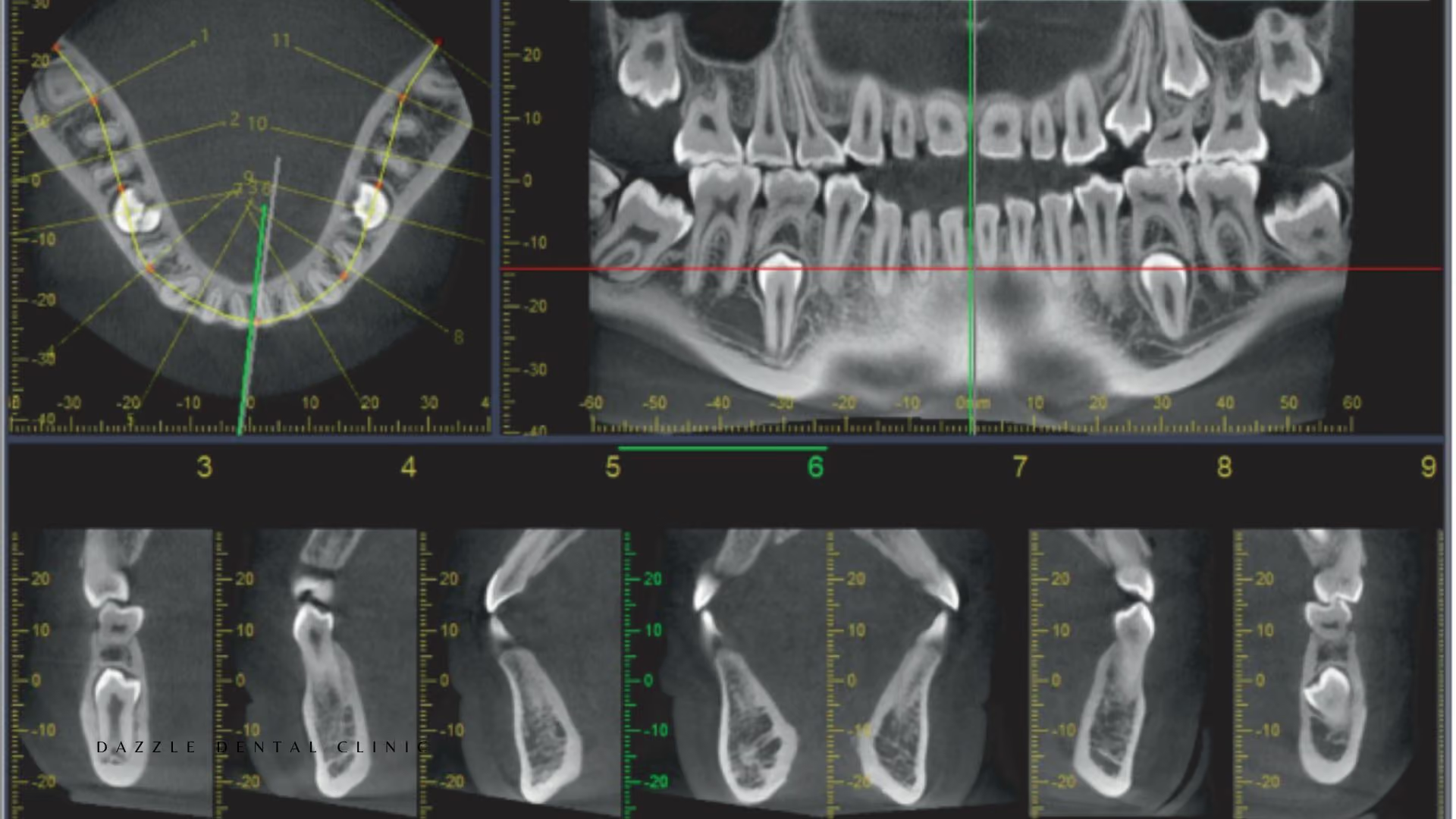
A cone-shaped X-ray beam rotates 360 degrees around the patient's head in 8–20 seconds, capturing multiple two-dimensional projection images from different angles. Software reconstructs these projections into a volumetric three-dimensional dataset from which images can be viewed in any plane: axial (horizontal cross-sections), coronal (front-to-back), sagittal (side-to-side), and panoramic reconstructions equivalent to an OPG. The scan time is short; the patient sits or stands still during rotation.
The field of view (FOV) is adjustable — a small FOV (focused on a specific region, such as a single quadrant) delivers lower radiation than a large FOV (covering the full skull). At Dazzle, the smallest FOV that captures the information needed for the clinical question is selected. A full-arch implant planning scan uses a larger FOV than a single-tooth implant assessment.
What CBCT Shows That 2D Cannot
The critical clinical advantage of CBCT over panoramic and periapical radiographs is the third dimension: bone height, width, and density are measurable at any site, and anatomical structures can be located in three-dimensional space.
For implant planning: bone height from crest to sinus floor (posterior upper jaw), bone height from crest to inferior alveolar nerve (lower jaw), bone width at any proposed implant diameter, bone density (correlates with Misch classification — Type I–IV), and the optimal implant angulation. None of these are measurable from an OPG.
For zygomatic implants: the zygomatic bone volume, the sinus floor anatomy, and the extrasinus vs intrasinus approach feasibility — all require 3D data. CBCT is mandatory for every zygomatic implant case at Dazzle.
For endodontics: the three-dimensional root canal anatomy (C-shaped canals, accessory canals, root curvature angles), periapical lesion dimensions and proximity to adjacent structures — information that changes clinical decisions in complex retreatment cases.
Radiation Dose
Effective dose for a small field-of-view dental CBCT: 20–100 microsieverts (μSv). For comparison: OPG (panoramic): 15–20 μSv. Full-mouth periapical series: 35–80 μSv. Medical chest CT: approximately 7,000 μSv. The dental CBCT dose is comparable to 2–3 days of background radiation exposure at sea level. The ALARA principle (as low as reasonably achievable) applies: a CBCT is ordered only when the clinical decision is expected to change based on its findings.
Sending CBCT Files for Remote Assessment
International patients who have had a CBCT performed elsewhere can send the DICOM files (the raw volumetric dataset, not PDF renders or screenshots) to Dazzle for pre-visit planning. The implantologist reviews the bone volume, determines implant candidacy and configuration, and provides a preliminary treatment plan and cost estimate before the patient commits to travelling. This service is available for All-on-4, zygomatic, and complex single-implant cases.
FAQs
Q1: Is a CBCT scan safe?
Yes. The dose is low — equivalent to a few days of natural background radiation. For pregnant patients, CBCT is deferred unless the clinical need is urgent. For all other patients, the diagnostic benefit justifies the minimal dose when the scan is appropriately indicated.
Q2: How long does a CBCT scan take?
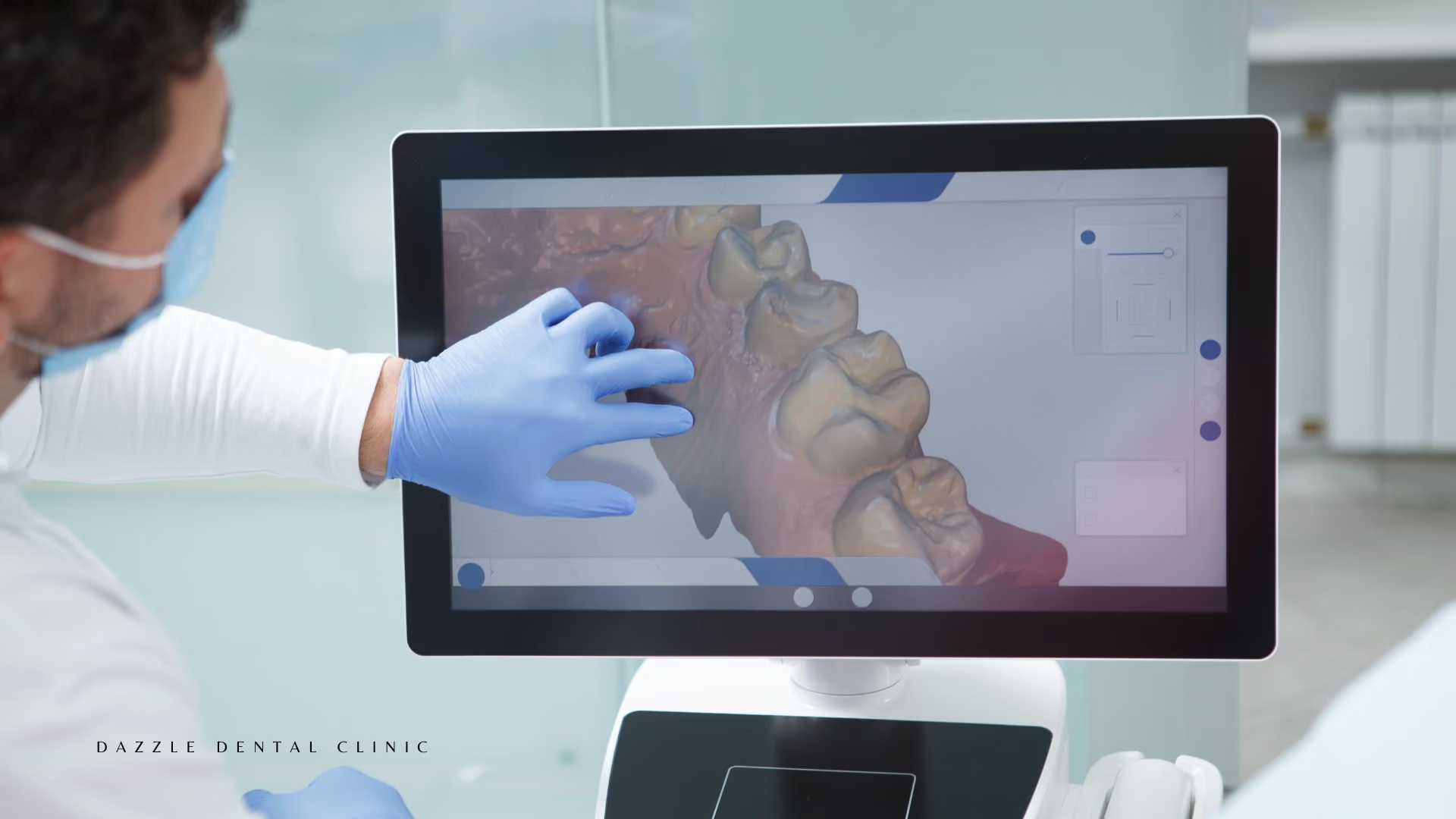
The rotation takes 8–20 seconds. Total time in the room including positioning: approximately 5 minutes. The scan data is available immediately for review; detailed analysis of the three-dimensional dataset by the clinician takes additional time and is typically done before the treatment planning appointment.
Q3: Do I need a CBCT before every implant?
Not necessarily. For single implants where periapical and clinical measurements confirm adequate bone, CBCT may not change the clinical decision. For full-arch implant cases (All-on-4, All-on-6), zygomatic cases, and single implants where bone volume is uncertain, CBCT is indicated and is standard at Dazzle. The decision is made case by case, not applied uniformly.
Q4: What format do I need to send my CBCT for remote review?
DICOM format — the complete volumetric dataset exported from the original CBCT machine. This is typically a folder of multiple files or a compressed archive (.zip). PDF exports and JPG screenshots cannot be used for three-dimensional measurement. CBCT centres can provide DICOM export on a USB or as a digital download. Scans older than 6–12 months may not reflect current bone levels, particularly at post-extraction sites.

.avif)