The moment a patient is told they aren’t a candidate for dental implants is often a defining one. It frequently happens at a general dental clinic, based on a panoramic X-ray review, without specialist input. Sometimes that assessment is accurate. Often it isn’t — or it represents only one part of the picture.
Zygomatic and pterygoid implants exist precisely for patients who fall outside the parameters of conventional implantology. This guide is written for patients who have received that “not a candidate” verdict and want to understand what options actually remain, and what the right questions are before concluding the conversation is closed.
The Specific Problem These Implants Solve
Conventional dental implants require sufficient alveolar bone — the ridge that housed the tooth roots — to anchor in. When this bone has resorbed significantly, conventional implants either cannot achieve adequate primary stability, or their placement would require bone grafting procedures first. In the upper jaw specifically, bone loss is compounded by maxillary sinus expansion, leaving some patients with very little workable bone in the posterior regions.
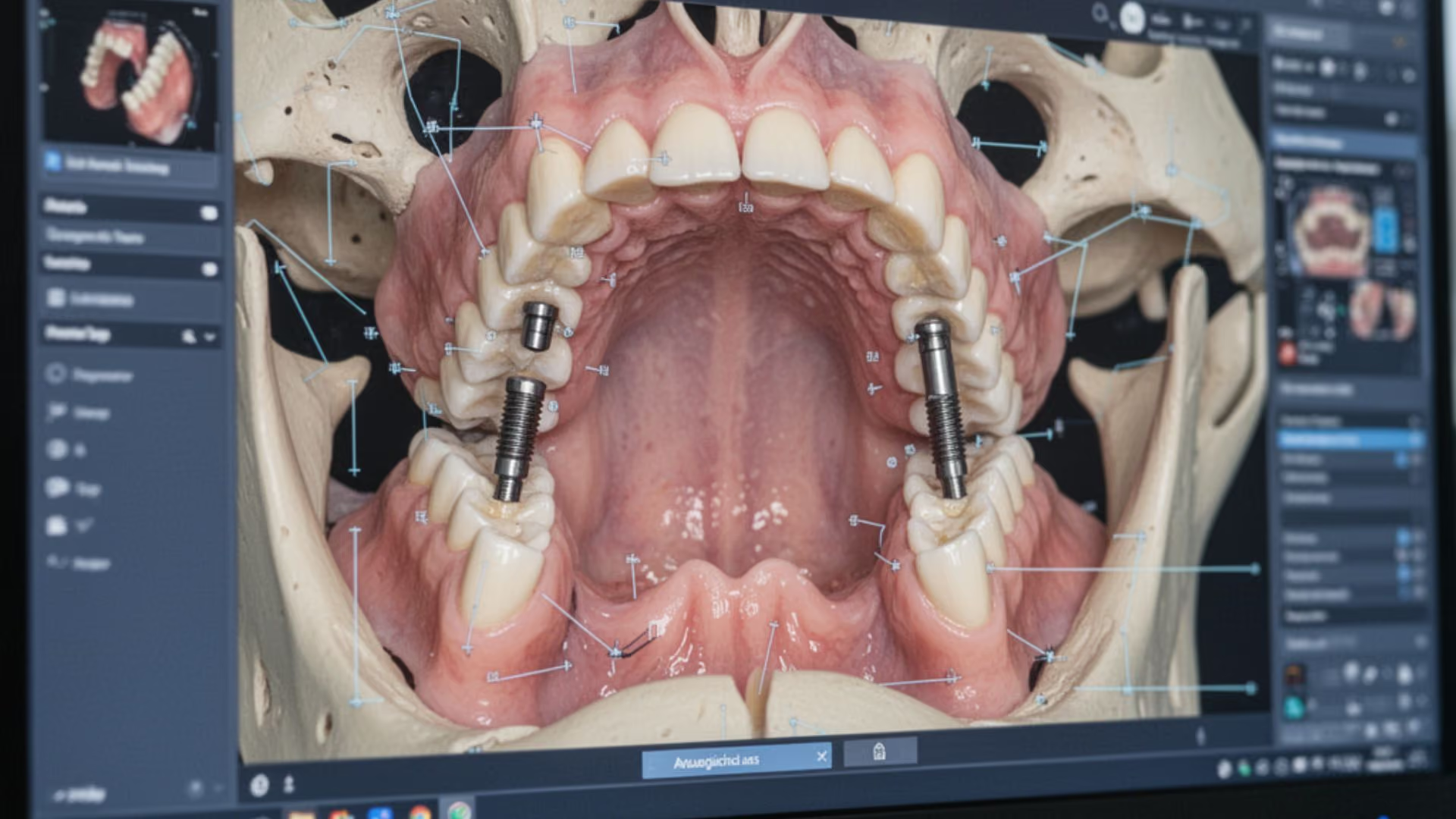
Zygomatic implants solve this by anchoring not in the alveolar ridge but in the zygomatic bone — the cheekbone — which is dense cortical bone that does not resorb regardless of tooth or ridge bone loss. Pterygoid implants solve the same problem in the posterior upper jaw by anchoring in the pterygoid plates at the junction of the maxilla and sphenoid.
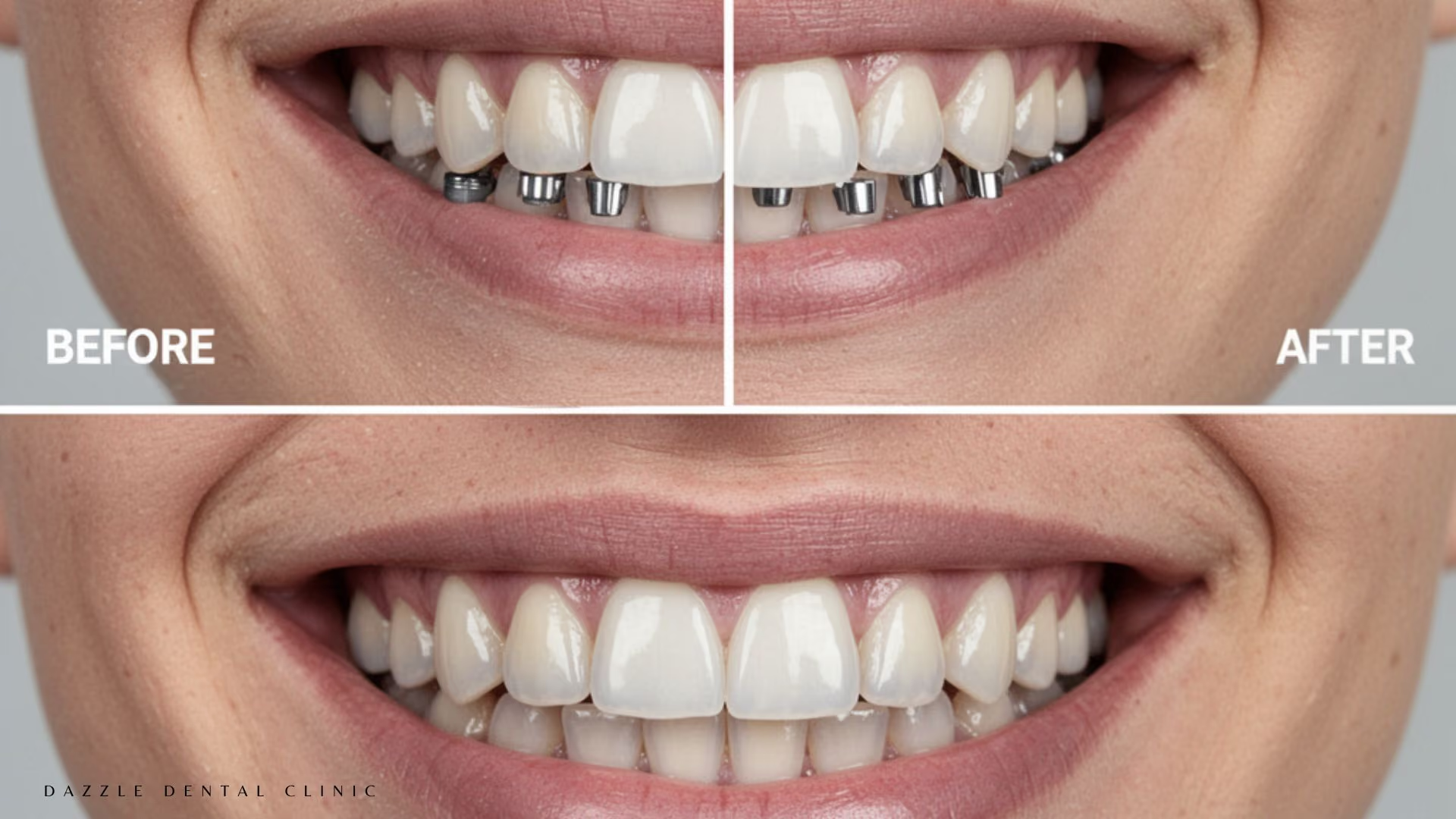
Both solutions bypass the deficient bone entirely, rather than trying to rebuild it first. The clinical outcome — a fixed, full-arch upper prosthesis with same-day provisional loading — is the same as with conventional All-on-4, achieved via a different anchorage route.
Questions Every Patient Should Ask
If you’ve been told you cannot have implants, or that zygomatic implants are your only option, these are the questions that deserve direct answers before you commit to any course of action:
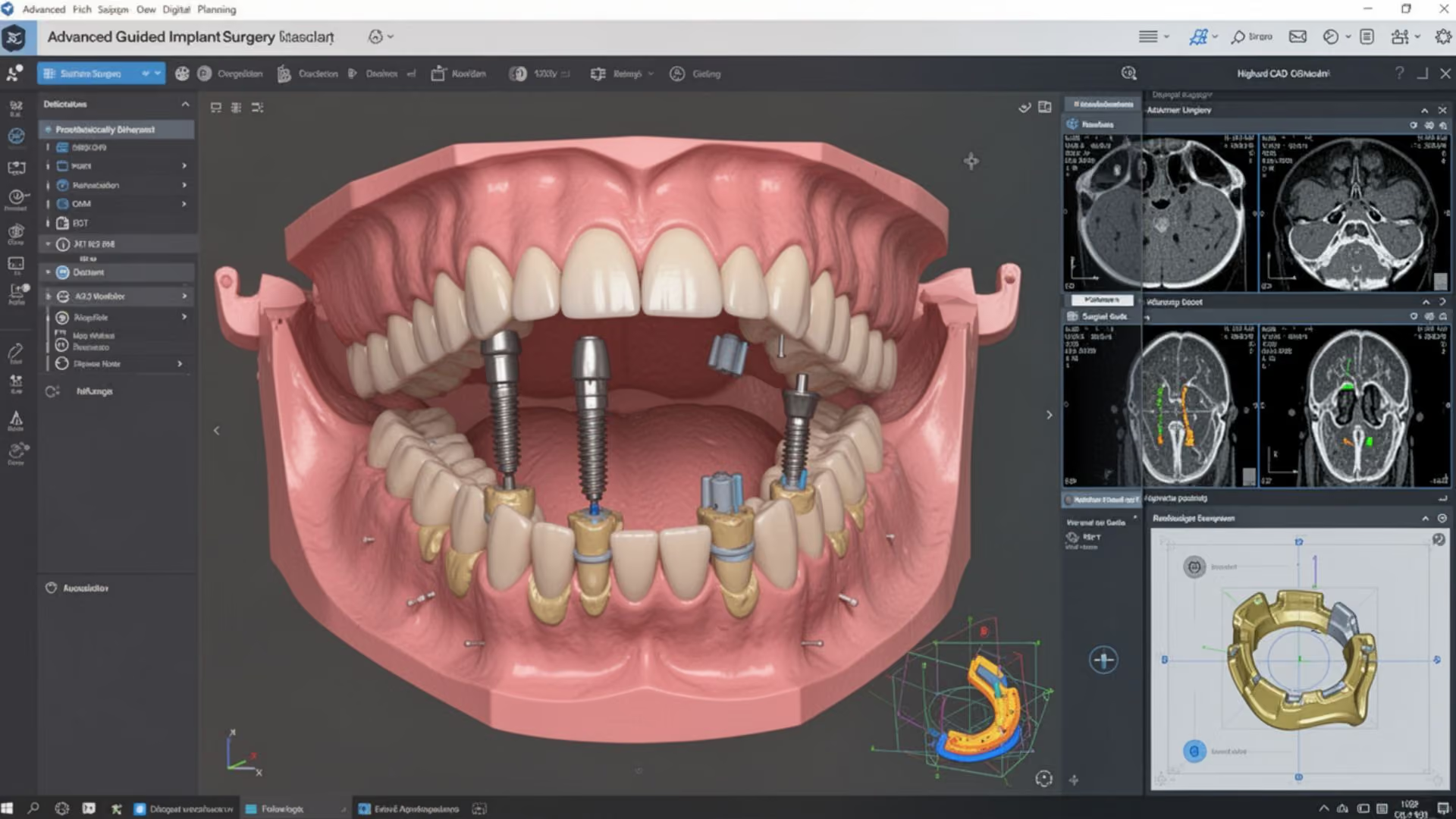
Was a CBCT scan done? A 2D panoramic X-ray cannot accurately assess bone width or the three-dimensional relationship between proposed implant sites and anatomical structures. A CBCT is the minimum required for any accurate assessment of complex implant candidacy.
Has All-on-4 with angled implants been considered? Many patients told they don’t have enough bone for conventional implants are actually candidates for All-on-4, which uses angled posterior implants specifically to work in areas of moderate resorption. This question alone resolves many cases that were unnecessarily referred for more complex procedures.
What is the surgeon’s specific training in zygomatic implants? This is not a procedure that generalises from conventional implant experience. It requires specific anatomical training and practice volume. Ask directly how many zygomatic implant cases the surgeon has performed.
What are the alternatives, including bone grafting? For patients where conventional implants could be placed after augmentation, zygomatic implants offer a single-stage alternative. For patients where augmentation isn’t feasible due to medical factors or the extent of bone loss, zygomatic implants may be the only viable route. These are different clinical situations and warrant different framing.
How Zygomatic and Pterygoid Implants Work Together
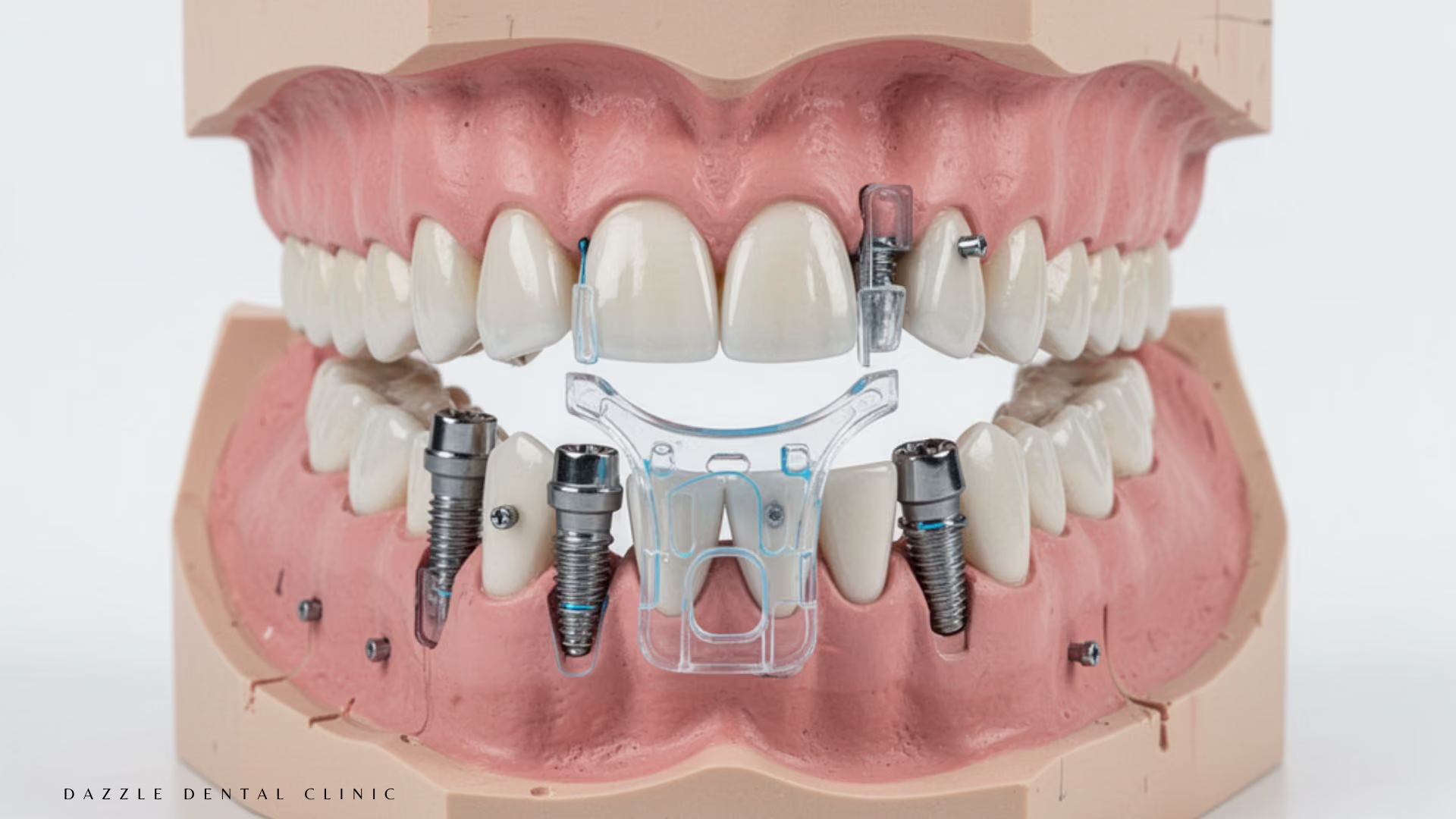
In most full-arch cases, zygomatic and pterygoid implants are not used alone. The typical protocol combines them with conventional implants where anterior maxillary bone is available, or pairs them with each other where it is not. Common configurations:
Two zygomatic implants (one per side) + two conventional anterior implants: covers most cases with moderate-to-severe posterior atrophy but reasonable anterior bone.
Four zygomatic implants (two per side): for cases of severe maxillary atrophy where even the anterior maxilla cannot support conventional implants.
Two zygomatic + two pterygoid implants: less common but used where both anterior and posterior posterior alternatives are needed.
The specific combination is determined by the patient’s anatomy and the CBCT findings, not by a standard template.
What to Expect at Dazzle Dental Clinic
Every zygomatic and pterygoid implant case at Dazzle begins with a CBCT review — which can be done remotely if you send your existing scan. We assess the anatomy, determine the most appropriate implant configuration, and provide a realistic treatment plan and cost estimate before you travel or commit to surgery. If your case is appropriate for conventional All-on-4 and you’ve been unnecessarily directed toward zygomatic implants, we will tell you that too.
Surgery is performed under local anaesthesia and IV sedation. A provisional prosthesis is attached the same day. Initial recovery takes 5–7 days; the final prosthesis is fitted at 3–6 months post-surgery. Full post-treatment documentation is provided for your home dental team.
Getting a Second Opinion
If you have been told you cannot have implants, you are entitled to a second opinion from a specialist centre with specific zygomatic implant experience. Send us your existing CBCT or arrange a remote consultation. We will give you an honest assessment of what’s possible for your specific anatomy — and if the answer is that conventional implants are actually viable for you, we will tell you that first.
FAQs
Q1: How do I know if I need zygomatic implants or if regular All-on-4 would work?
A CBCT scan reviewed by a specialist who performs both procedures is the only reliable way to answer this. Patients with moderate bone loss are frequently found to be All-on-4 candidates once properly assessed. Zygomatic implants are indicated when the bone loss is severe enough that even angled conventional implants cannot achieve adequate primary stability.
Q2: Can pterygoid implants be used on the lower jaw?
No. Pterygoid implants are specific to the upper jaw (maxilla), anchoring in the pterygoid plates at the back of the maxilla. For the lower jaw, different solutions apply — the anatomy and bone resorption patterns differ significantly.
Q3: How long is the recovery after zygomatic implant surgery?
More pronounced swelling than conventional implant surgery for the first 48–72 hours. Most patients are comfortable for travel and normal activity within 7–10 days. Full tissue healing occurs over 3–6 months alongside osseointegration, though patients function normally on the provisional prosthesis during this period.
Q4: Is there an age limit for zygomatic implants?
No. The same considerations apply as for conventional implants — systemic health, medication profile, and bone anatomy are the relevant factors, not age. Successful outcomes have been achieved in patients in their 70s and 80s.

.webp)