.webp)

When patients first encounter the terms All-on-4, All-on-6, and All-on-8, the natural assumption is that more implants is always better. It's a reasonable intuition — but the clinical reality is more nuanced. Each protocol was designed for a specific set of patient conditions. Choosing the right one is about matching the technique to your anatomy and clinical needs, not selecting a tier on a menu.
This guide explains how each system works, what clinical factors determine the appropriate choice, and what to expect from the process at Dazzle Dental Clinic.
What Full-Arch Restoration Means
Full-arch restoration replaces every tooth in an upper or lower jaw with a fixed, implant-supported prosthesis. The implants are placed into the jawbone; the bridge is permanently attached. Unlike removable dentures, the prosthesis doesn't come out, doesn't shift, and doesn't require adhesive. It functions, and feels, like a fixed set of teeth.
The number of implants supporting the prosthesis — four, six, or eight — affects how load is distributed across the jaw, how much bone is required, and how the prosthesis performs over time. The choice between protocols is a clinical decision, not a cosmetic preference.
All-on-4: The Engineering Behind It
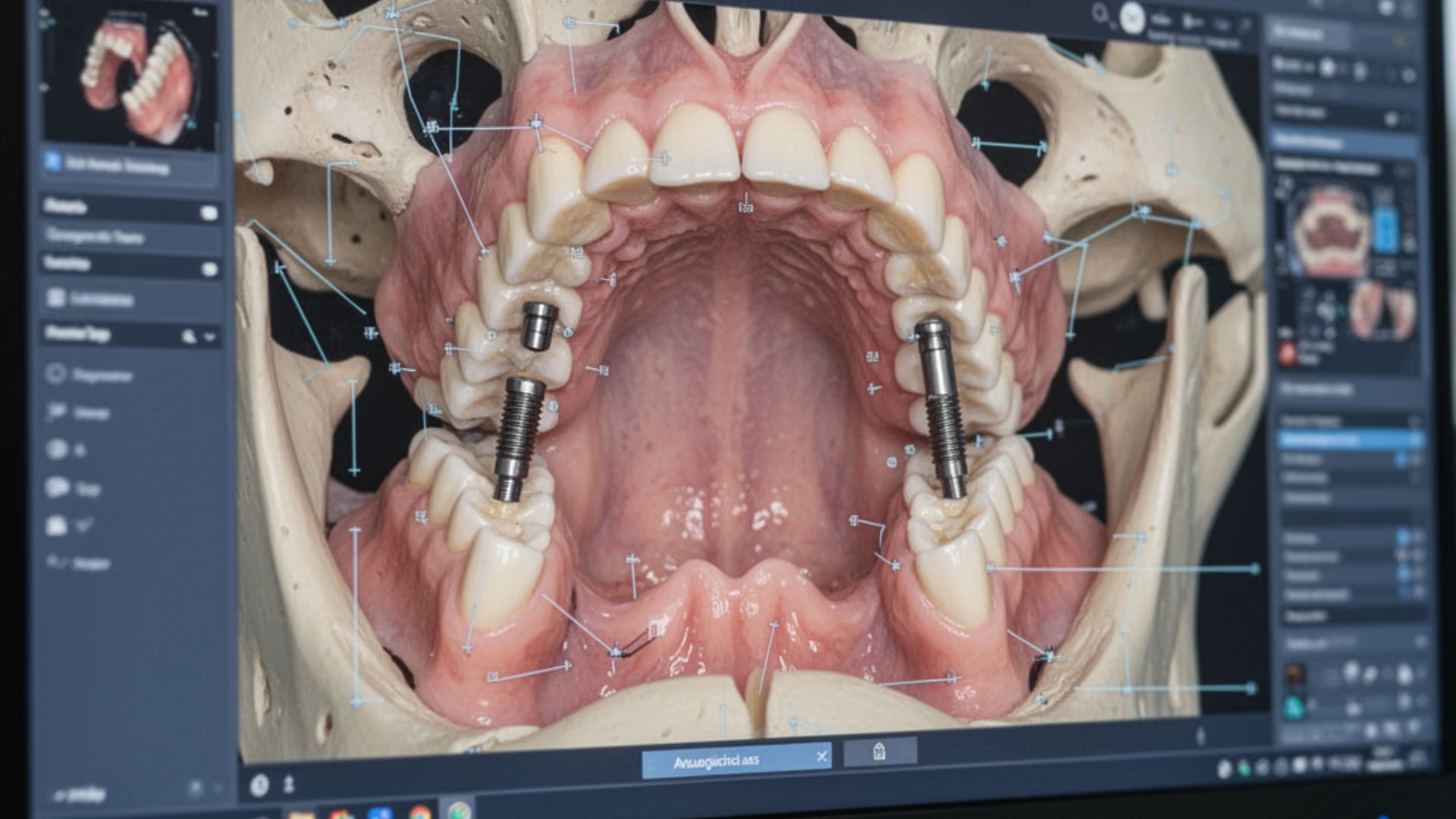
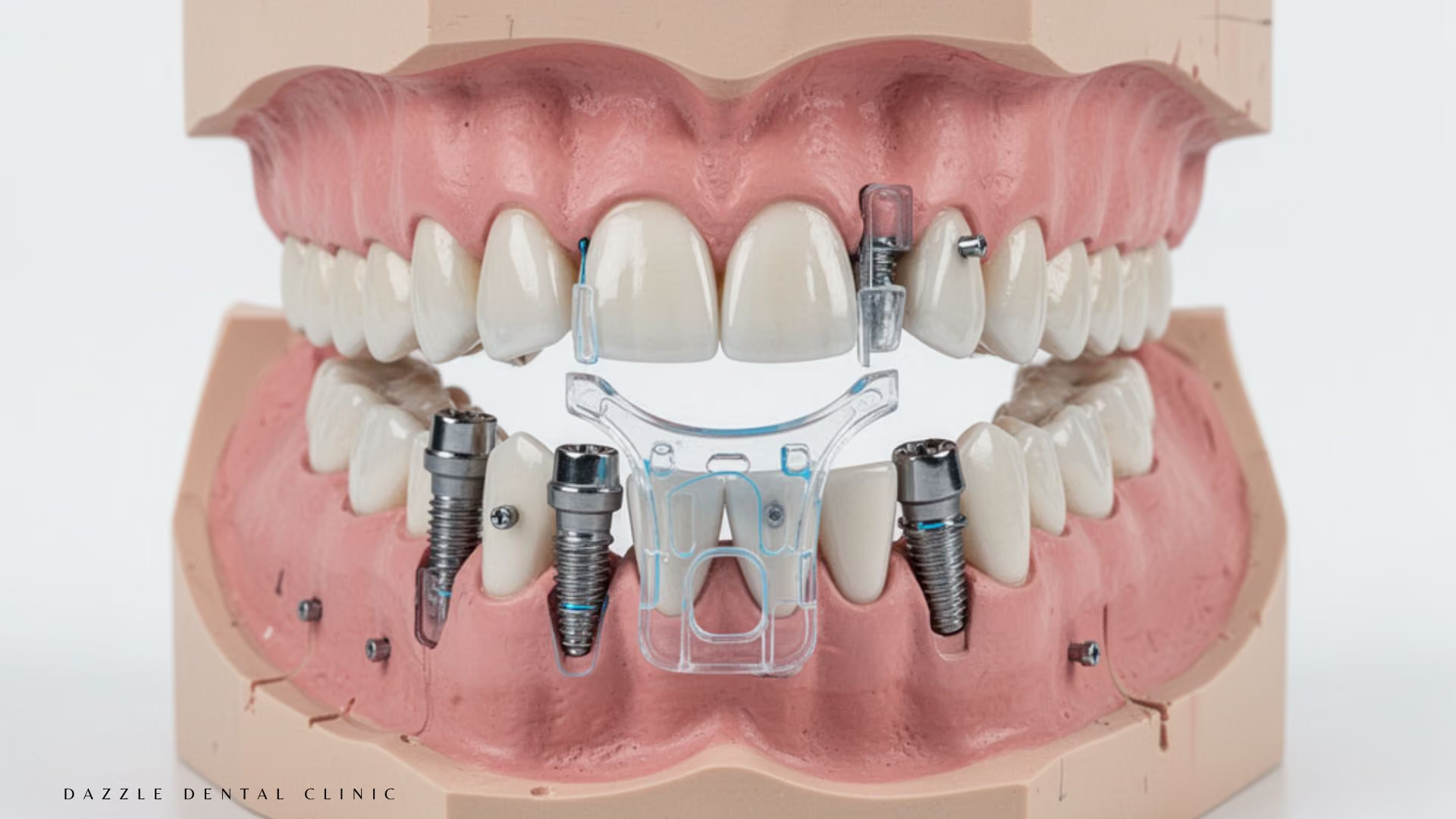
All-on-4 dental implants place two vertical implants in the anterior jaw and two implants angled at approximately 45 degrees posteriorly. The angled placement is deliberate — it engages denser anterior bone, avoids the maxillary sinus (upper jaw) and the inferior alveolar nerve (lower jaw), and creates a longer antero-posterior spread that stabilises the prosthesis without requiring implants in the most resorbed posterior regions.
This makes All-on-4 particularly well-suited to patients with moderate bone resorption, as it works around the areas of greatest bone loss rather than requiring bone grafting to rebuild them. Same-day loading — where a provisional prosthesis is attached on the day of surgery — is routinely possible with this protocol, giving patients functional teeth immediately after surgery.
All-on-6: When Additional Support Changes the Outcome
All-on-6 adds two more implants to the All-on-4 framework, typically placed in the mid-arch region. The result is more anchor points distributing load across the prosthesis, which benefits patients with higher occlusal forces (parafunctional habits like bruxism, or simply a more powerful bite), a wider or longer arch, or those where additional implant redundancy provides meaningful long-term security.
All-on-6 is not categorically superior to All-on-4 — it's specifically indicated when the additional implants address a genuine clinical need. Placing six implants in a patient who would do equally well with four adds cost and surgical complexity without proportional benefit. This is a conversation we have directly with every patient based on their CBCT scan findings.
All-on-8: Maximum Coverage for the Right Cases
All-on-8 uses eight implants to support the arch. This protocol is indicated for patients with good bone volume throughout the jaw who benefit from the most evenly distributed load possible, typically patients with a broad arch, heavier bite, or those wanting the maximum foundation for a high-quality final prosthesis. It's the least frequently indicated of the three protocols and isn't appropriate for patients with bone deficiency.
How the Decision Is Actually Made
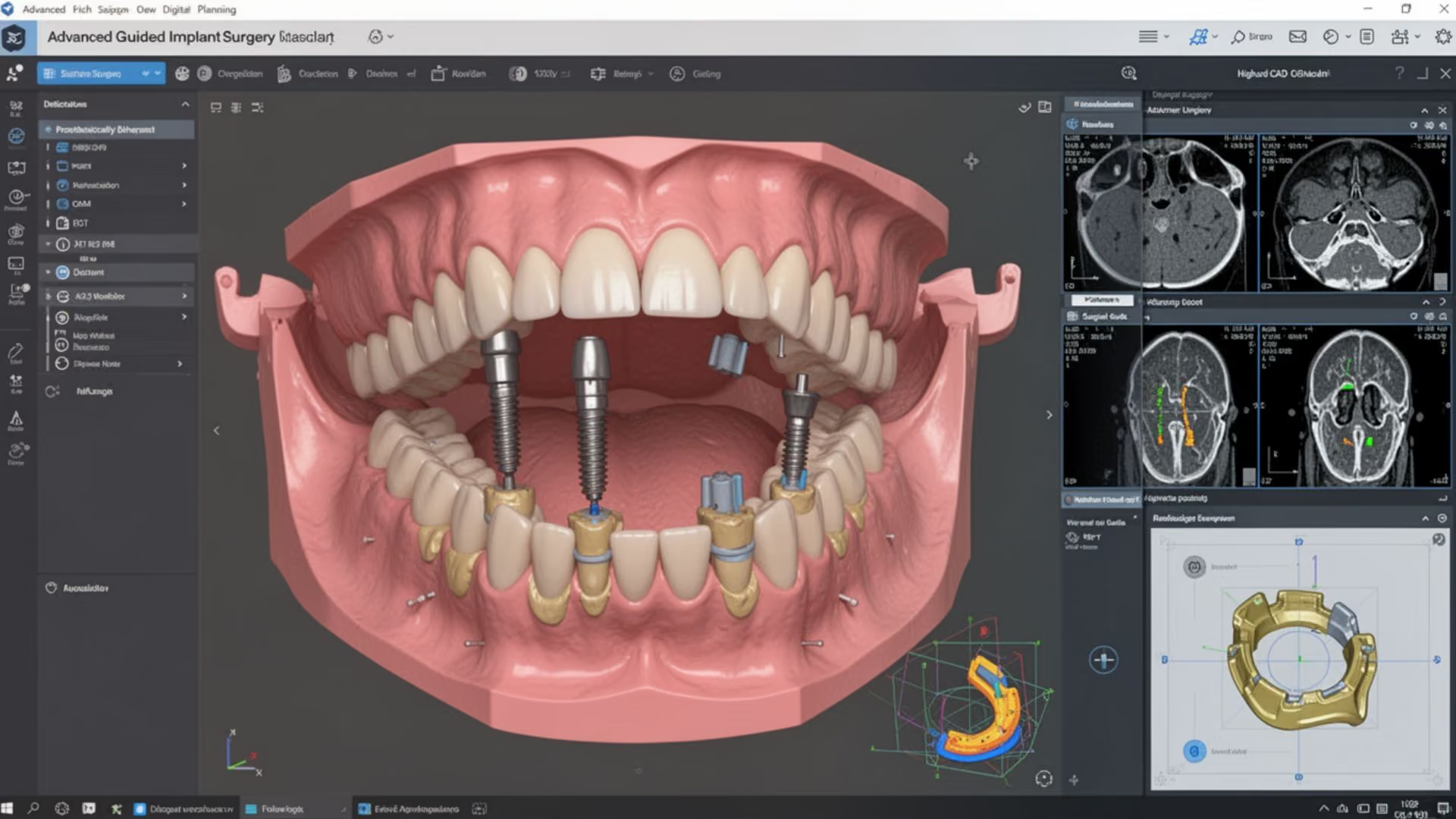
The choice between these protocols cannot be made from a website. It requires a CBCT scan to assess bone volume, density, and architecture in three dimensions; a clinical examination to evaluate bite force, ridge width, and soft tissue; and a discussion of your goals, timeline, and budget. Our implantology team at Dazzle reviews all of this together and recommends the protocol that fits your specific anatomy — not the one that's most common or most profitable.
In some cases, factors like the need for bone grafting prior to implant placement, or the use of zygomatic or pterygoid implants for patients with severe maxillary bone loss, change the protocol entirely. These options exist precisely for patients who've been told they don't have enough bone for conventional full-arch implants.
The Treatment Process: What to Expect
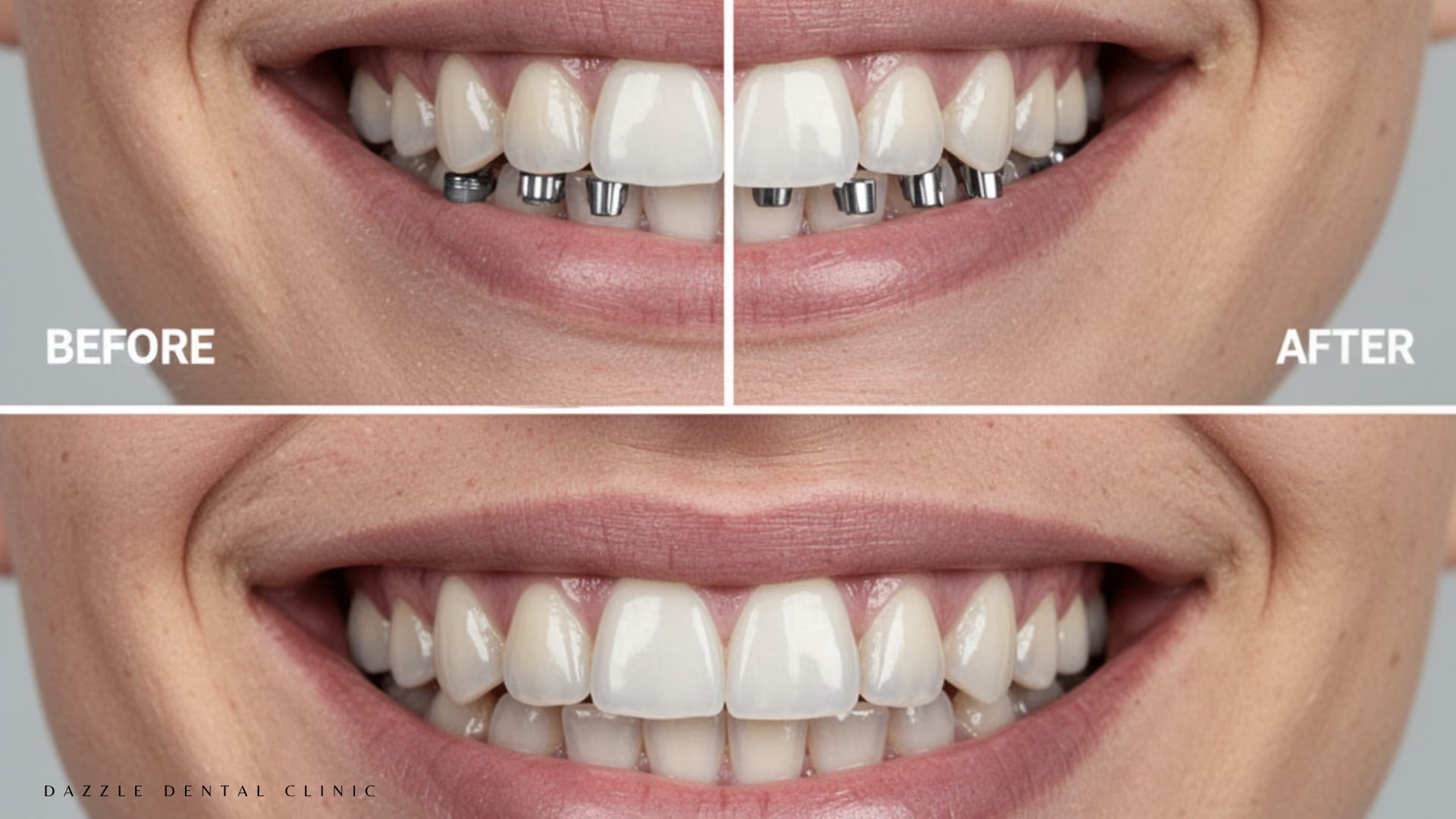
Regardless of the protocol chosen, the treatment sequence is similar. Diagnosis and treatment planning begin with imaging and a clinical assessment. On surgery day, the implants are placed under local anaesthesia or sedation. For immediate-loading cases, a provisional prosthesis is attached the same day. Over three to six months, the implants integrate with the jawbone. Once integration is confirmed, the final prosthesis — fabricated in our in-house digital laboratory — is fitted.
The in-house laboratory matters for full-arch cases specifically because prosthesis fit on multiple implants is technically demanding. The ability to iterate and adjust rapidly, with direct communication between surgeon and technician, significantly affects the precision of the final result.
Cost Comparison
All-on-4 is typically the most cost-effective full-arch option — fewer implants, often no bone grafting, and a streamlined surgical protocol. All-on-6 sits at a higher price point reflecting the additional implants and surgical time. All-on-8 is the highest-cost option. For detailed pricing guidance, see our All-on-4 cost breakdown. For patients travelling from the UK, USA, GCC, or Australia, all three protocols at Dazzle Dental Clinic represent significant savings over equivalent treatment in their home markets, often 50–70%.
FAQs
Q1: Is All-on-6 always better than All-on-4?
No. All-on-6 is better in specific cases — higher bite forces, broader arches, patients wanting additional redundancy. For patients whose anatomy and bite load are well-served by All-on-4, the extra implants don't improve the outcome meaningfully. The right protocol is determined by your scan and clinical assessment, not by a general ranking.
Q2: Can I have All-on-4 or All-on-6 if I've already lost significant bone?
In many cases, yes. The angled implant design in All-on-4 and All-on-6 is engineered specifically to work in areas of reduced bone. Patients who've been told they need bone grafts before implants often qualify for All-on-4 without grafting. A CBCT scan is needed to assess your specific situation.
Q3: How long does the full-arch procedure take on surgery day?
Implant placement for All-on-4 typically takes 2–3 hours per arch under local anaesthesia. Fitting of the provisional prosthesis adds time. Most patients are in the clinic for half a day and leave with functional teeth the same day.
Q4: What happens if one implant fails in an All-on-4 case?
A single implant failure in an All-on-4 case is a serious but manageable complication. The remaining implants may maintain prosthesis stability while the failed implant is assessed — in many cases, replacement is possible. This is one clinical argument for All-on-6: additional implants provide redundancy. We discuss failure management as part of informed consent before any procedure.