.webp)

Dental problems are unusual among health conditions in that people frequently live with them for extended periods without seeking treatment. Pain thresholds vary; dental anxiety is common; cost concerns are real. But the clinical reality of most dental conditions is that delay makes treatment more complex, more expensive, and harder to reverse. Understanding what untreated dental problems actually lead to helps clarify why early attention is consistently the better choice.
Dental Pain and Sensitivity
Pain is a biological signal, not a nuisance. Tooth pain that responds to temperature, sweets, or biting pressure indicates that the nerve or surrounding tissue is under stress. In most cases, this represents a cavity that has penetrated into the dentine layer, a cracked tooth, or early pulpitis (nerve inflammation). At this stage, treatment is conservative: a filling, onlay, or in some cases a crown.
Left untreated, the process advances. Bacteria penetrate deeper. Pulpitis progresses to irreversible pulp necrosis. Root canal treatment becomes necessary. If the infection spreads into the surrounding bone (periapical abscess), surgical drainage may be needed. What was a one-appointment filling becomes a multi-appointment procedure costing significantly more and requiring more recovery. Pain that “comes and goes” is particularly deceptive — it often signals that the nerve has died, not that the problem has resolved.
Missing Teeth
A missing tooth creates a chain of consequences that most patients do not anticipate. The opposing tooth in the other arch drifts downward (or upward) to fill the space — supraeruption. Adjacent teeth tilt towards the gap. The alveolar bone at the missing tooth site resorbs progressively without the stimulation of biting force. After 1–2 years, the bone loss and tooth movement may make implant placement more complex and require additional procedures that were unnecessary at the time of extraction.
The functional consequences are real. Chewing efficiency decreases measurably with missing posterior teeth, affecting diet quality over time. Speech patterns can change with missing anterior teeth. The aesthetic impact affects confidence in social and professional contexts in ways patients consistently underreport until the issue is resolved. For options when teeth are missing, see our dental bridges guide and implant overview.
Gum Disease
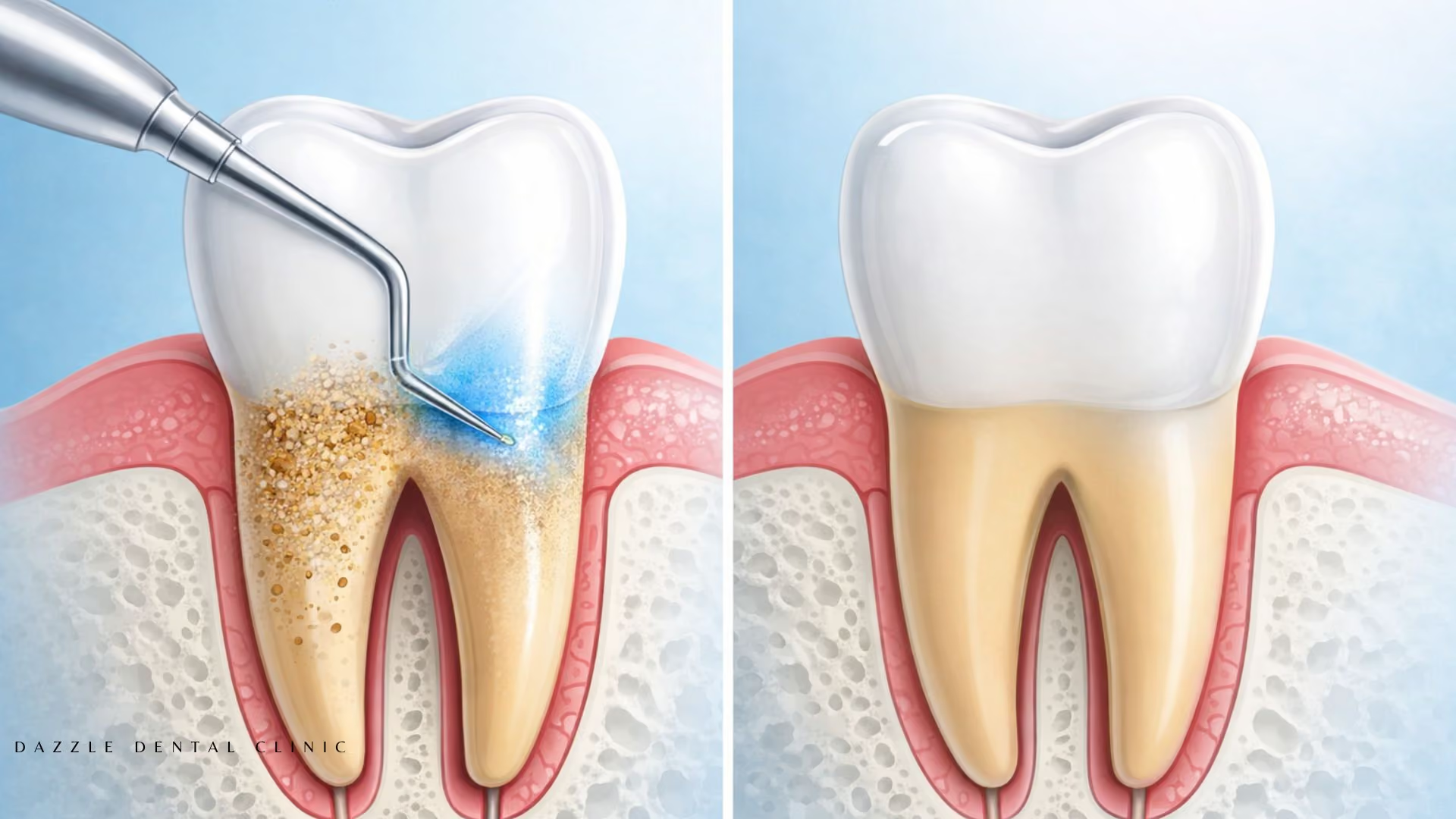
Gum disease (periodontal disease) is the most prevalent serious dental condition and the most consistently undertreated. It is often silent in early stages — bleeding when brushing is frequently dismissed as normal, when it is in fact the primary sign of gingivitis. Left untreated, gingivitis progresses to periodontitis: bone destruction around teeth, pocket deepening, eventual tooth mobility and loss.
The systemic connections to periodontal disease are well-documented. Published research shows associations between untreated periodontal disease and cardiovascular disease, diabetes progression, adverse pregnancy outcomes, and respiratory conditions. Treating gum disease is not only about keeping teeth — it is about managing an infection that has systemic consequences.
Dental Anxiety: The Barrier That Compounds Everything
Fear of dental treatment is common. An estimated 15–20% of adults avoid dental visits due to anxiety, and approximately 5–10% have dental phobia that significantly impacts their ability to access care. The consequence is predictable: avoidance leads to more severe disease at the point of presentation, which requires more invasive treatment, which reinforces the anxiety.
At Dazzle Dental Clinic, IV sedation and oral sedation options are available for anxious patients. Conscious sedation allows the patient to be present and responsive while fully comfortable and without fear or discomfort. For patients with significant anxiety, this is not a luxury option — it is the clinical pathway that makes treatment accessible. The first step is a consultation appointment where no treatment is performed and the patient’s specific concerns are discussed. Contact us to arrange this.
What Comprehensive Dental Care at Dazzle Involves
Dazzle Dental Clinic provides the full range of dental specialties under one roof at Bandra West and Kemps Corner: restorative dentistry (fillings, onlays, crowns, bridges), periodontal treatment, endodontics, oral surgery, orthodontics, implantology (including full-arch and zygomatic cases), and cosmetic dentistry. For patients with multiple problems — gum disease, missing teeth, and failing restorations simultaneously — a coordinated multidisciplinary plan is prepared that sequences treatment logically.
The goal of the initial consultation is not to propose the most extensive treatment possible. It is to assess what is present, explain the clinical consequences of each problem and the options for each, and allow the patient to make an informed decision about their priorities and timeline.
FAQs
Q1: My tooth stopped hurting — does that mean the problem resolved?
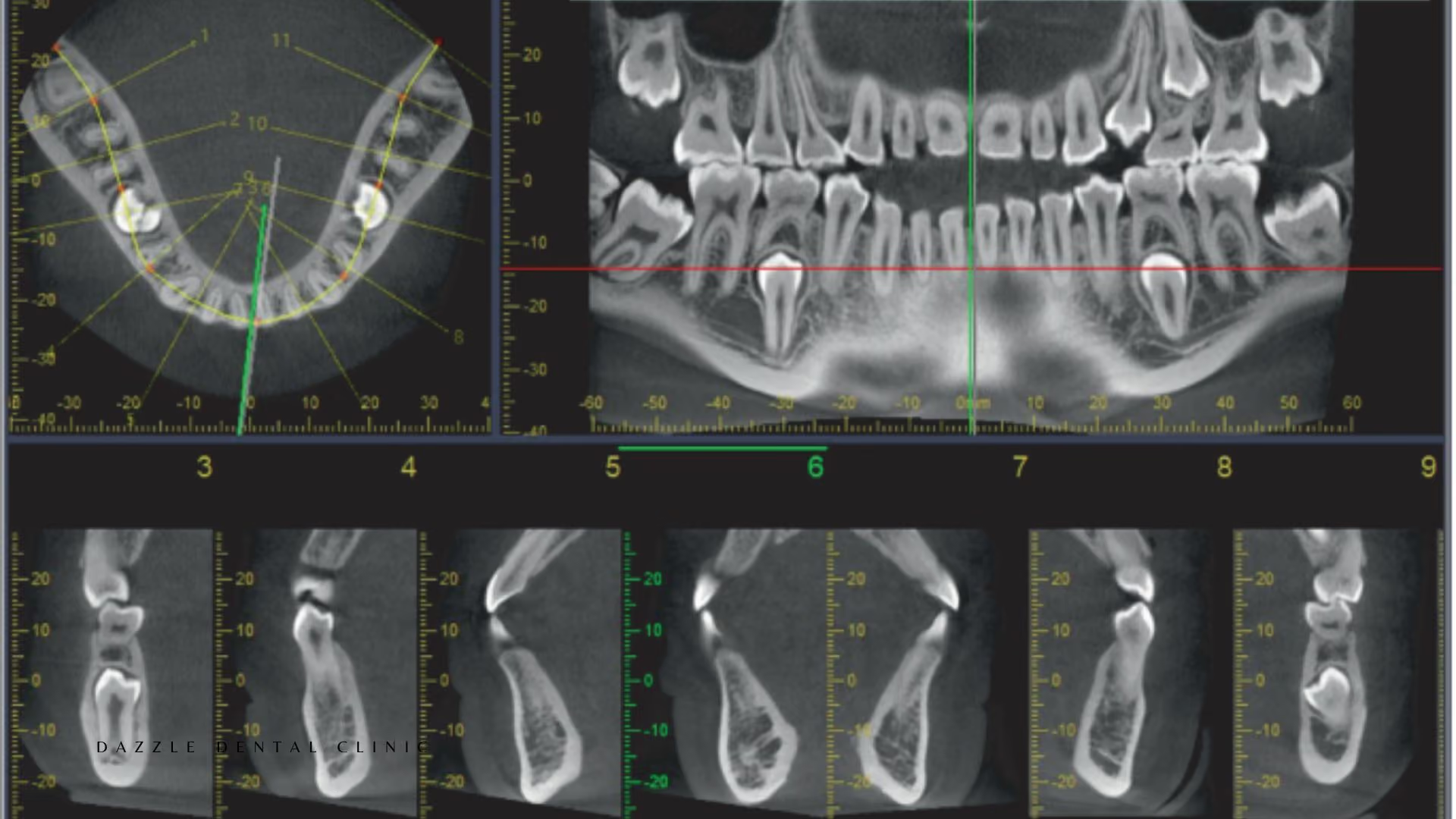
Usually not. When tooth pain resolves without treatment, the most common explanation is that the nerve has died (necrosis). The source of infection is still present; the sensation simply no longer reaches the nerve because the nerve is no longer functional. A dead tooth can harbour periapical infection for months without pain before producing symptoms again. Assessment by clinical examination and radiograph is the only reliable way to determine what has occurred.
Q2: How long can I wait before getting a missing tooth replaced?
The optimal window for implant placement without complication is within the first 6–12 months after extraction, before significant bone resorption and adjacent tooth movement occur. After this window, the implant case may require additional procedures. Delay beyond 2 years typically means more complex treatment than was necessary at extraction. If immediate or early implant placement is not possible, socket preservation grafting at the time of extraction is an option to maintain bone volume.
Q3: My gums bleed when I brush but don’t hurt — is that a problem?
Yes. Healthy gums do not bleed when brushed gently with a soft-bristled brush. Bleeding on brushing is the primary clinical sign of gingivitis. Gingivitis is reversible with professional cleaning and improved home hygiene. If untreated, it progresses to periodontitis, which involves bone destruction and is not reversible. Early-stage bleeding gums warrant a periodontal assessment.
Q4: I haven’t been to the dentist in years and I’m embarrassed about the state of my teeth. Can Dazzle still help?
Yes. This is a more common situation than most patients realise. Many of our patients come to us after years of avoidance. We do not assess patients on the basis of how long they waited — we assess the current clinical situation and what the realistic options are. The consultation appointment is judgment-free. The clinical team’s role is to establish what is present and what can be done, starting from wherever the patient is.

.avif)