


.webp)

The visible result of a dental restoration — a crown, veneer, implant crown, or full-arch bridge — depends substantially on the tissue foundation it sits on. Gum margins that are uneven, excess gingival display that alters tooth proportions, inadequate bone volume at an implant site, or a biological width violation at a crown margin are not problems that better ceramic solves. They are tissue problems that require tissue solutions before or alongside the restorative work.
At Dazzle Dental Clinic, soft and hard tissue sculpting is led by Dr Rajesh Shetty (MDS, periodontics) and the periodontic team. It is integrated into treatment planning from the start of complex restorative and implant cases, not added as a correction after the fact.
Soft Tissue Sculpting: Why Gum Architecture Matters
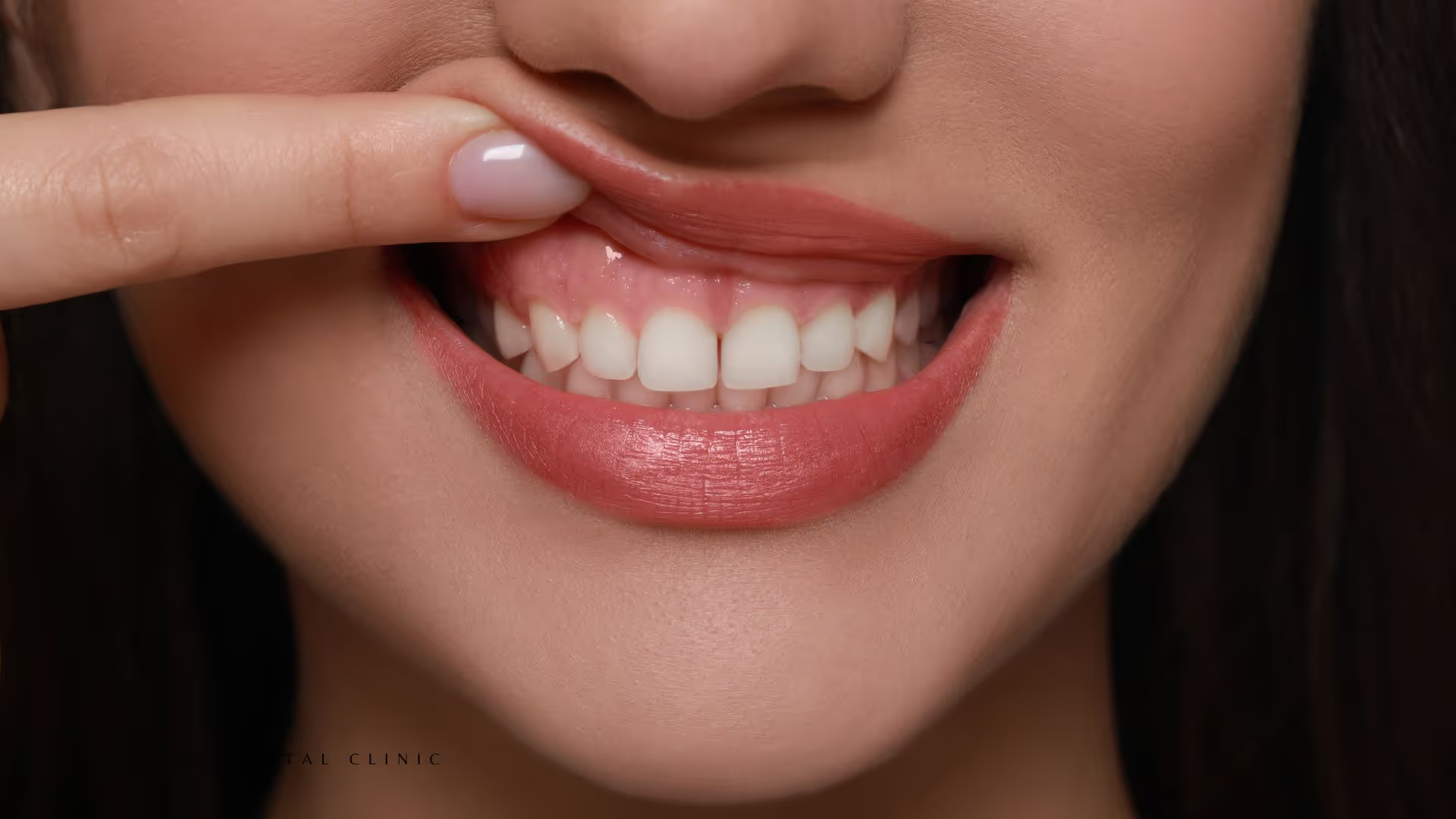
The gum margins of the upper anterior teeth should form a harmonious arc. The gingival zenith — the highest point of the gum on each tooth — follows a specific relationship: for central incisors and canines, the zenith is positioned slightly distal to the tooth’s long axis; for lateral incisors, it is approximately at the midpoint. Departure from this pattern produces a gum line that reads as asymmetrical, regardless of how well the crowns or veneers are made.
Soft tissue sculpting procedures at Dazzle include laser-assisted gingival contouring (Fotona Er:YAG for precision, minimal bleeding, rapid healing), surgical crown lengthening for biological width correction before crown placement, soft tissue grafting to increase keratinised gum tissue volume around implants or recession sites, and pedicle and free connective tissue grafts for root coverage. For gummy smile cases, the treatment may include laser contouring alone (for cases where the bone level is appropriate) or osseous crown lengthening where the bone must also be repositioned.
Hard Tissue Sculpting: Bone Management in Implant and Periodontal Surgery
Bone architecture determines implant position, implant stability, and the long-term maintenance of peri-implant health. Hard tissue sculpting at Dazzle includes: alveolar ridge augmentation (guided bone regeneration with membrane and graft material) for implant site preparation; osseous recontouring during crown lengthening to maintain biological width; socket preservation at extraction to limit bone resorption before implant placement; and piezo-surgical bone modification for precise hard tissue cutting with minimal thermal damage.
Piezo-surgery uses ultrasonic vibration to cut mineralised tissue only — it does not cut soft tissue at the same tip velocity — which significantly reduces the risk of sinus membrane perforation during sinus lift surgery and nerve damage during mandibular procedures.
Integration with Restorative and Implant Treatment Planning
Complex cases are treatment-planned with the periodontic and restorative or implant specialist in the same room. The crown that will sit on an implant must emerge from tissue at the correct level and through a keratinised gingival collar of adequate width. The veneer that will be placed after crown lengthening must have the margin placed at the biologically correct depth to avoid peri-gingival inflammation. These sequencing decisions are made before surgery, not discovered after the restoration fails at the margin.
FAQs
Q1: What is biological width and why does it matter for crowns?
Biological width is the distance of healthy connective tissue and junctional epithelium that attaches to the tooth above the bone crest. When a crown margin is placed closer to the bone than the biological width allows, the body responds with chronic gingival inflammation and bone loss at the crown margin. Crown lengthening repositions the bone crest apically to create space for the biological width plus the crown margin without encroachment.
Q2: How much gum tissue around an implant is necessary for long-term health?
A minimum of 2mm of keratinised gum tissue (KT) around the implant circumference is associated with better long-term peri-implant health outcomes. Sites with less than 2mm KT are more susceptible to peri-implant mucositis and peri-implantitis. Where insufficient keratinised tissue exists, soft tissue grafting before or at implant placement improves this parameter.
Q3: Can gum contouring be done without surgery?
Laser-assisted gum contouring (Fotona Er:YAG) is minimally invasive and performed without scalpel incisions in appropriate cases where the bone position does not need to be changed. Recovery is faster than surgical crown lengthening. However, if the gum excess is due to a high bone crest, laser contouring alone will result in tissue regrowth — the bone must be repositioned for a stable result.
Q4: How long is the recovery after crown lengthening?
Soft tissue healing occurs over 2–4 weeks. Final tissue maturation and marginal stabilisation takes 6–8 weeks, which is why final crowns or veneers are not placed until this period has passed.


.jpg)


