.webp)

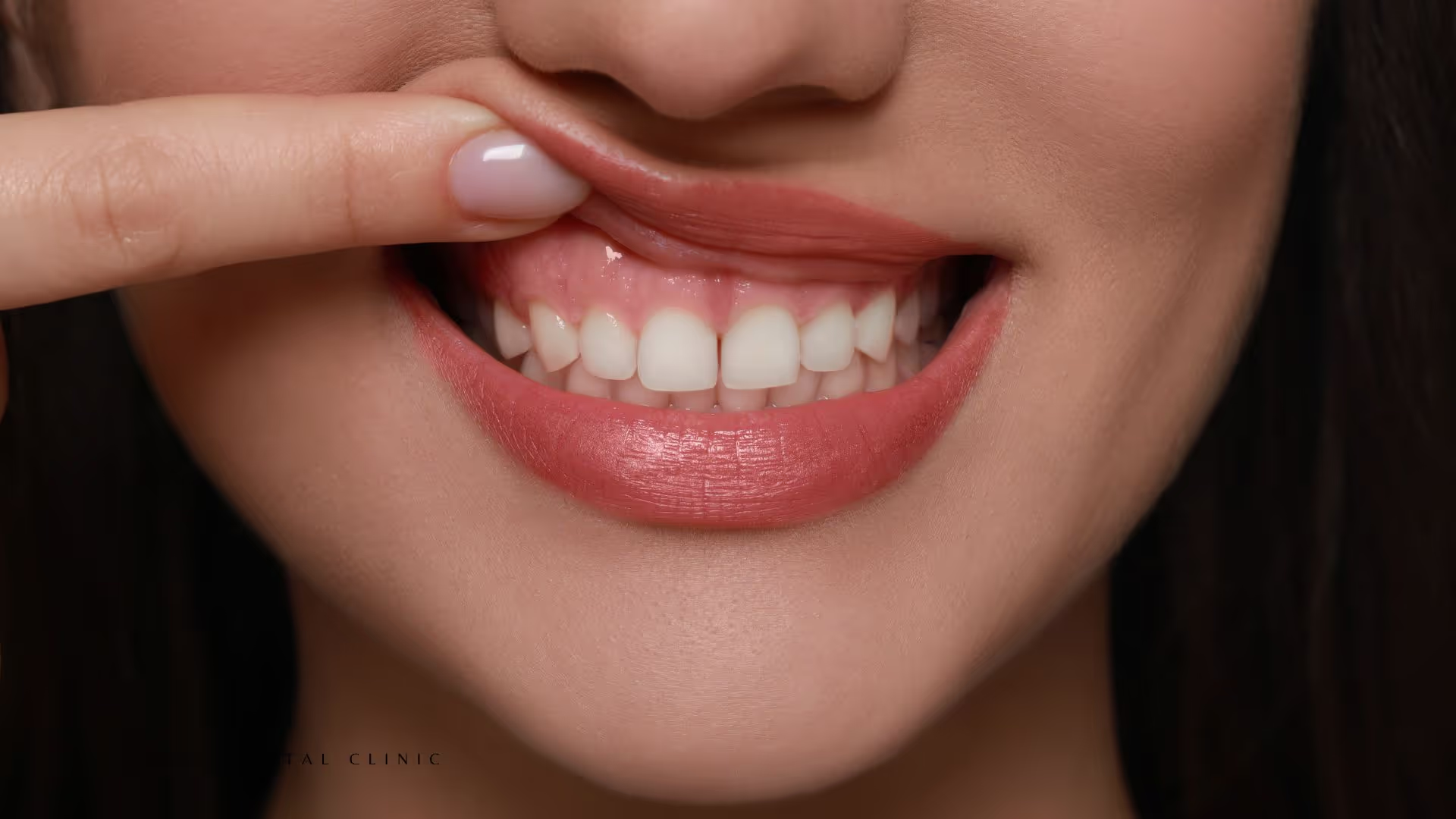
Class V cavities occupy a specific and often overlooked zone: the smooth cervical surface of a tooth, at or just below the gumline. Unlike the fissure cavities that develop on chewing surfaces — where plaque pools in grooves — Class V lesions affect the smooth surfaces of the tooth’s neck, and they form through a different mix of mechanisms. Understanding why they occur and why they require specific materials and technique helps patients engage with their treatment decision more clearly.
Why Class V Lesions Occur
The cervical region of a tooth is vulnerable for specific reasons. Enamel is thinnest at the cervical margin — it tapers to near-zero thickness at the cementoenamel junction (CEJ) where crown meets root. Below the CEJ, the root surface is covered by cementum rather than enamel. Cementum is substantially softer and more permeable than enamel, and root surfaces exposed by gum recession are significantly more susceptible to acid attack and decay than the crown surface above.
Class V lesions have two distinct aetiological groups:
Carious lesions: Decay caused by bacterial acid production from plaque accumulation at the gumline. Common in patients with poor gingival margin hygiene, high sugar diets, or reduced salivary flow (from medications or systemic conditions). Gingival inflammation from the adjacent lesion often complicates detection and treatment.
Non-carious cervical lesions (NCCL): These occur without bacterial decay and include abrasion (physical wear from aggressive brushing — the most common cause of wedge-shaped cervical defects), erosion (acid dissolution from dietary sources or acid reflux), and abfraction (stress-induced enamel fracture at the cervical stress concentration point from occlusal forces). Many NCCLs are multifactorial — a combination of all three — and identifying the primary aetiology is important for preventing recurrence.
Why Class V Restorations Require Specific Technique
The cervical region presents three technical challenges not present in occlusal or interproximal restorations:
Moisture control: The gingival margin is at or below the gum level. Crevicular fluid and saliva continuously contaminate the operating field. Achieving adequate moisture control for bonding requires careful isolation — often retraction cord or a sectional isolation device — without which composite bonding quality is compromised and marginal seal fails early.
Flexural stress at the CEJ: The cervical tooth neck flexes slightly under occlusal load. Restorations that are too rigid (amalgam, hard ceramics) can debond or fracture at the restoration-tooth margin in response to this flexure. Composite resin or glass ionomer cement, which have some compliance, tolerate this flexure better and have lower debonding rates in the cervical region.
Polymerisation shrinkage direction: Composite shrinks toward the light cure source. In the cervical region, managing shrinkage direction through incremental placement and oblique light positioning reduces gap formation at the gingival margin — the point most prone to leakage and secondary decay.
Material Selection: Composite vs Glass Ionomer
Composite resin: The standard at Dazzle for most Class V restorations. Superior aesthetics and bonding strength when properly isolated and incrementally placed. The correct choice for lesions in the aesthetic zone (anterior teeth, premolars) and where moisture control is achievable. Flowable composites are often used for the initial increment at the gingival margin, as their lower viscosity adapts better to the narrow cervical preparation.
Glass ionomer cement (GIC): Less aesthetically precise than composite but chemically bonds to both enamel and dentin without an adhesive layer and is more tolerant of moisture during placement. The preferred material where moisture control is difficult (deep subgingival margins), in elderly patients with high caries risk (GIC releases fluoride long-term and provides chemical caries protection), and in patients where multiple NCCLs are being managed across a full appointment where time does not allow full composite isolation protocol at every site.
Preventing Recurrence
Treating the lesion without addressing its cause produces a restoration that will fail early or be replaced by a new lesion adjacent to it. At Dazzle, this means applying biomimetic dentistry principles: for carious Class V lesions, oral hygiene review of the gingival margin, diet analysis, saliva assessment where indicated. For NCCLs: brushing technique correction (toothbrush trauma is the most common cause; ultrasonic/electric brushes with pressure sensors reduce it significantly), dietary acid reduction, and occlusal analysis where abfraction is suspected (nightguard if bruxism is present).
FAQs
Q1: Are Class V lesions painful?
Dentinal sensitivity is the most common symptom — sharp, brief pain to cold, sweet, or air stimulus. The sensitivity reflects exposed dentinal tubules at the cervical margin. The lesion itself is not painful unless it is deep enough to approach the pulp, at which point irreversible pulpitis can develop. Sensitivity alone is a sufficient reason to treat a cervical lesion early.
Q2: How long do Class V fillings last?
Published longevity data for composite Class V restorations: 70–80% intact at 5 years, 50–65% at 10 years. GIC restorations have slightly lower long-term retention but continuous fluoride release compensates clinically. Longevity depends significantly on: whether the primary cause was addressed; isolation quality at placement; and whether the occlusal load on the restoration is appropriate.
Q3: Do Class V fillings require drilling?
Carious Class V lesions require removal of infected dentin — this involves preparation, though minimally invasive protocol removes only infected tissue and preserves healthy dentin. NCCLs often require no or minimal preparation — the defect itself provides retention for the restoration without additional cavity preparation.
Q4: Can brushing cause Class V lesions?
Yes. Toothbrush abrasion is the most common cause of wedge-shaped cervical defects (a classic NCCL pattern). Hard-bristled toothbrushes combined with horizontal scrubbing motion abrading the soft root cementum and cervical enamel are the primary mechanism. Switching to a soft-bristled brush with a modified Bass technique — or to an electric brush with pressure feedback — stops progression and allows existing lesions to be restored without recurrence.


.jpg)