.webp)

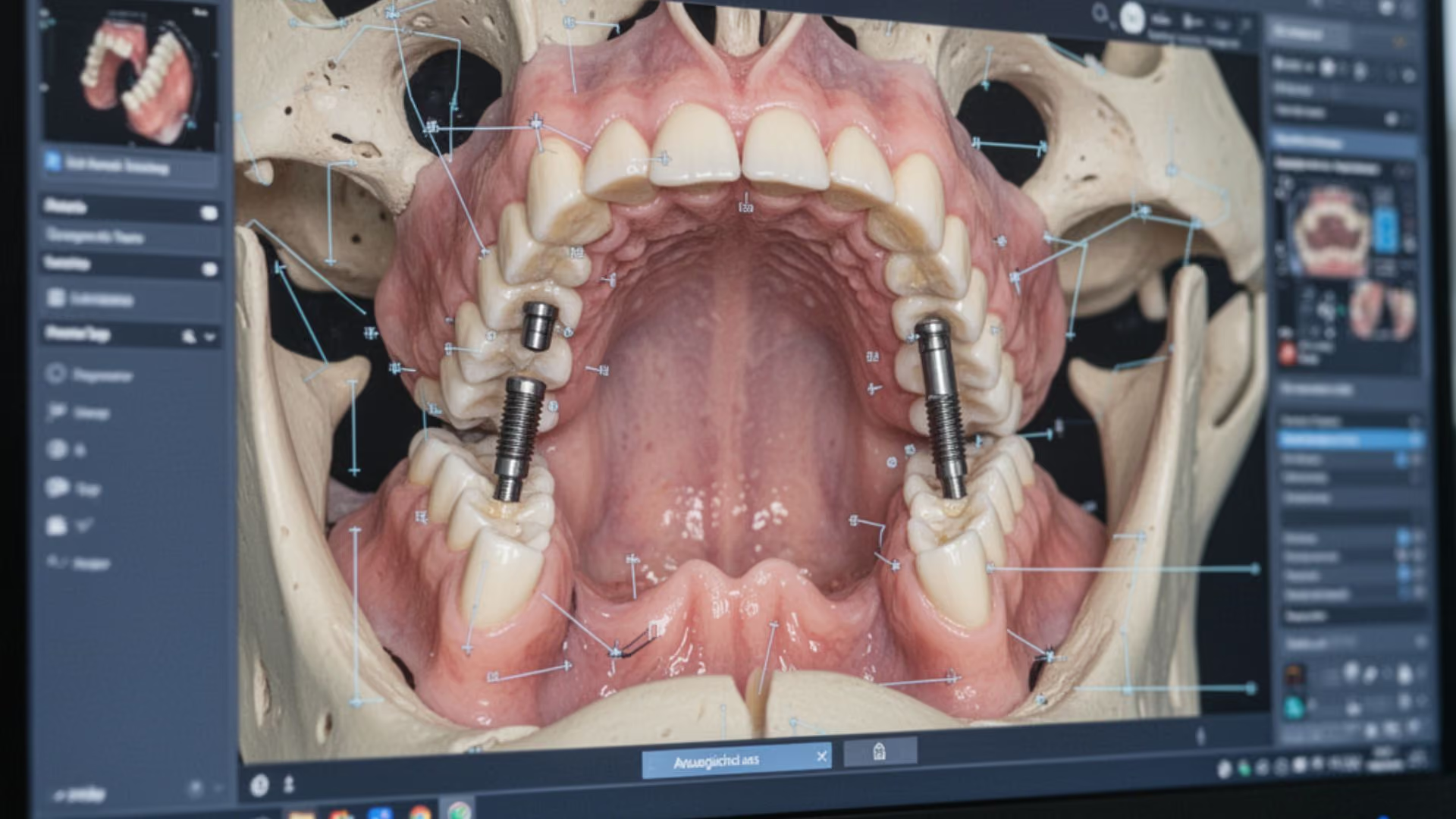
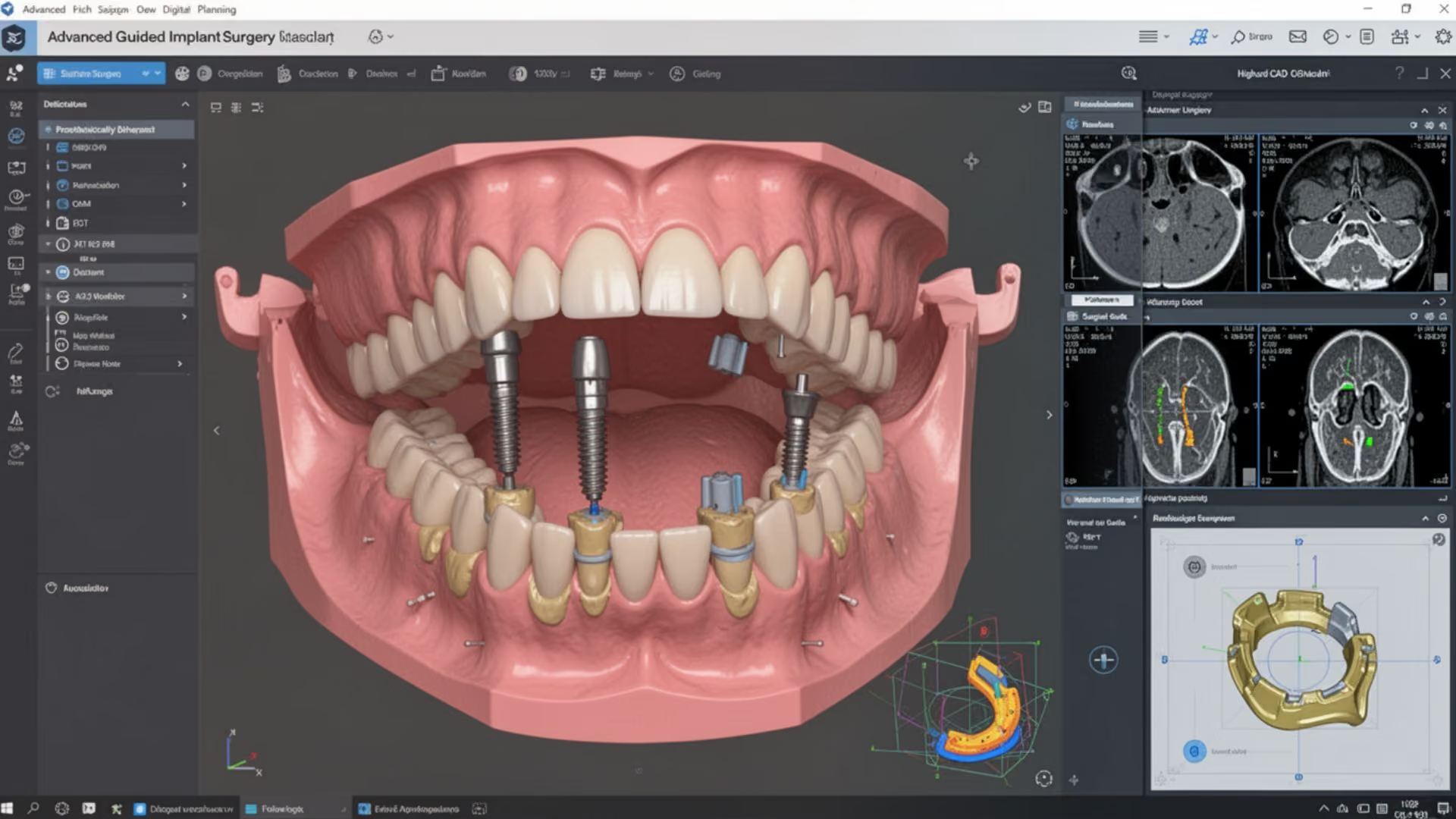
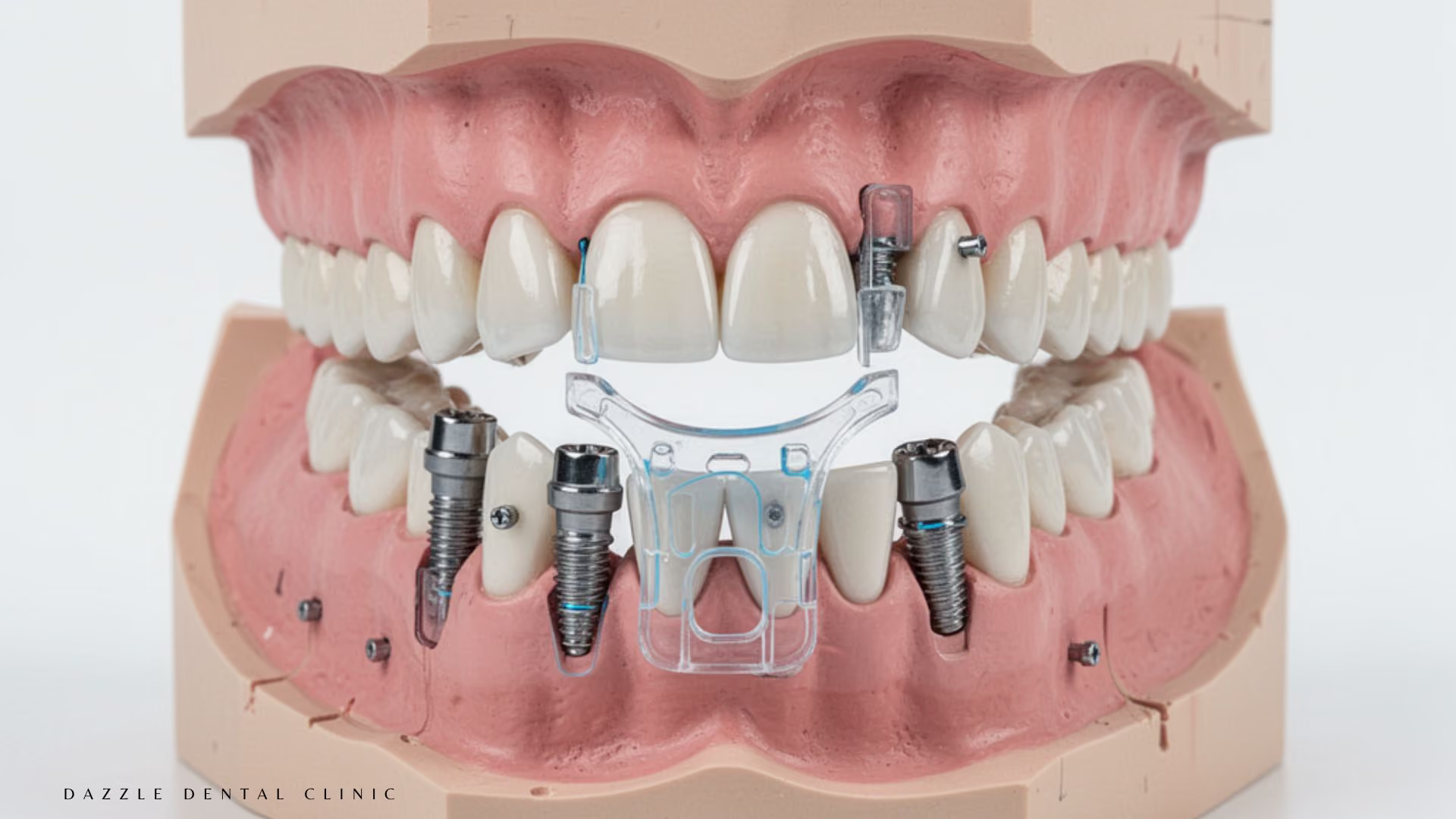
Not all dental implants perform identically. The brand, thread design, diameter, and surface treatment of an implant fixture each influence primary stability at placement, the rate of osseointegration, long-term bone maintenance, and candidacy for immediate loading. At Dazzle Dental Clinic, implant system selection is made case-by-case based on the patient’s CBCT bone assessment, the planned loading protocol, and the prosthetic design — not on a single-system default.
Why System Selection Matters
Primary stability — the mechanical grip of the implant in bone at placement — is measured by insertion torque (Newton-centimetres). The threshold for immediate loading is approximately 35 Ncm. Different thread designs generate different insertion torque in the same bone quality. In dense Type I–II bone (mandibular anterior), most premium systems achieve this threshold. In soft Type III–IV bone (posterior maxilla), only systems with aggressive thread geometry consistently achieve the threshold — which determines whether same-day teeth are achievable or whether staged loading is required.
Surface treatment determines how rapidly bone cells colonise the implant surface after placement — the speed of osseointegration. This affects when the provisional bridge can be converted to a final restoration and the implant’s long-term stability under functional load.
Nobel Biocare: Nobel Active
Nobel Active uses a progressive tapered thread design where pitch and depth increase toward the apex. As the implant is driven deeper, it engages bone with progressively more aggressively geometry, building torque predictably even in soft posterior maxillary bone. TiUnite/TiUltra surface: oxidised titanium with micro-to-nano topography that increases effective surface area and creates a positively charged surface for protein adsorption and early bone cell attachment. Nobel Active is the primary system at Dazzle for All-on-4 full-arch cases and single implants requiring immediate loading in variable bone. Published 10+ year survival: 95–98% in well-selected cases.
Straumann: SLActive/BLX
Straumann SLActive uses a hydrophilic surface (kept wet and chemically active from manufacturing to placement). Hydrophilic surfaces attract blood and fibrin immediately on seating, accelerating the early cellular response. Published data: SLActive achieves functional osseointegration at 3–4 weeks vs 6–8 weeks for standard SLA surfaces. Straumann BLX uses a self-drilling design with versatile thread geometry spanning Type I–IV bone. Straumann systems are used at Dazzle for conventional-loading single implants in patients with good bone quality and for cases where the longer healing timeline is not a concern. Per-unit cost: ₹45,000–65,000.
MegaGen: AnyRidge
MegaGen AnyRidge uses a variable-pitch thread design (different thread depths at different points along the fixture body) that provides strong primary stability across Misch Type I–IV bone. Xpeed surface: calcium-ion exchange coating that creates a localised alkaline microenvironment on placement, stimulating osteoblast activity. AnyRidge is used at Dazzle as a cost-efficient high-stability option for All-on-4 cases and variable bone quality scenarios. Published survival data: comparable to premium systems in equivalent bone conditions. Per-unit cost: ₹35,000–60,000.
Osstem
Osstem TSIII and related systems are used at Dazzle for cost-optimised conventional loading cases (the MIRA All-on-4 protocol uses Osstem). Solid published 10-year data across a large clinical base. Per-unit cost: ₹35,000–45,000. The clinical framework — CBCT planning, guided surgery, in-house laboratory — is identical to premium system cases; the implant component cost is lower. For a full comparison of brands, see our implant brands comparison guide.
CAD/CAM Customisation: Abutments and Prosthetics
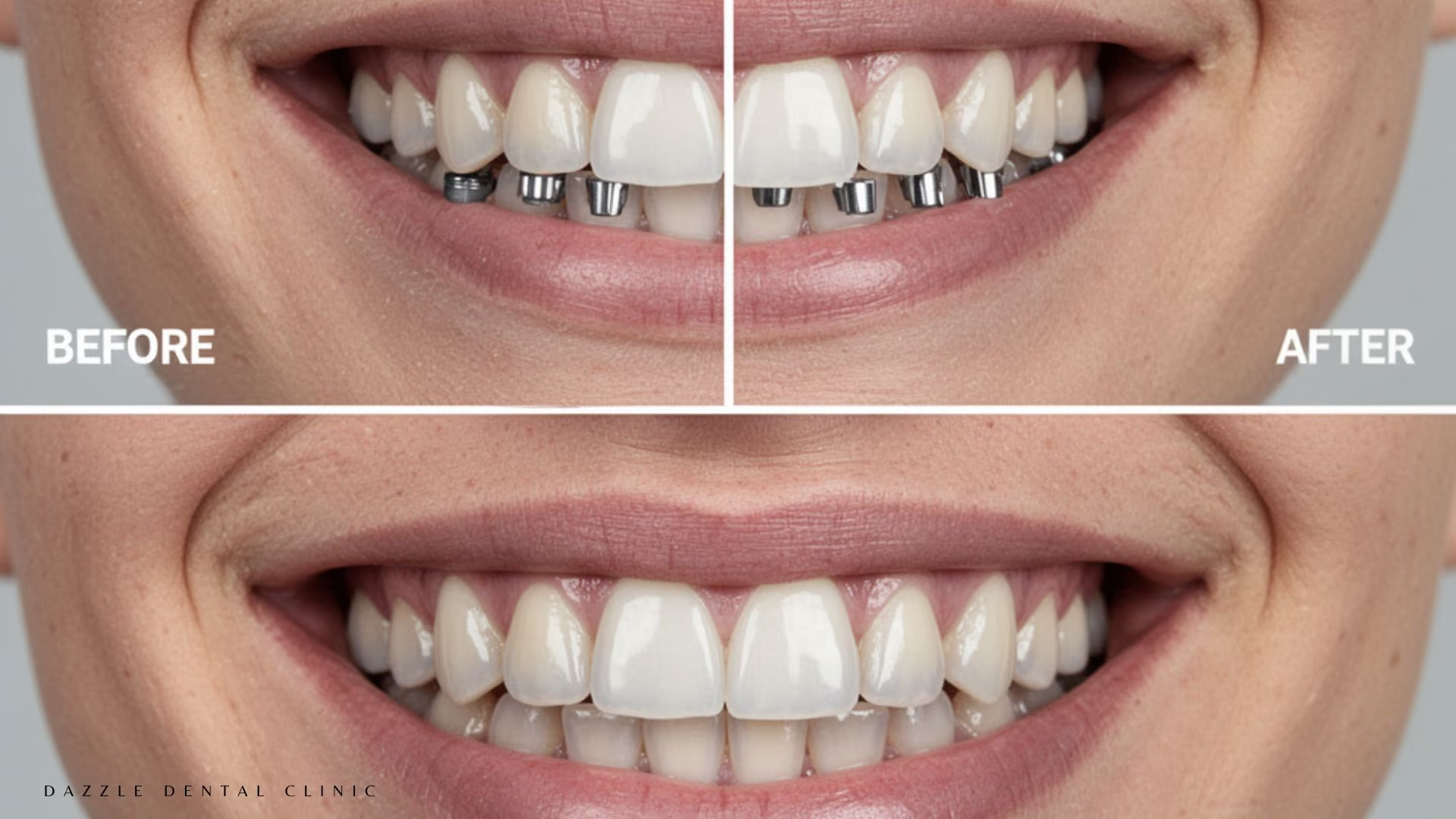
Regardless of implant brand, the abutment and crown fabricated from the intraoral scan are designed case-specifically in the in-house laboratory. Custom abutments (milled from titanium or zirconia in the Amann Girrbach unit) provide the correct emergence profile — the transition from the implant neck to the crown margin at the gum level. Stock abutments do not achieve this for all anatomical positions. The crown (zirconia posterior, E.max anterior) is designed to the specific tooth position, shade, and occlusal contacts of the individual case.
FAQs
Q1: Can I choose which implant brand I receive?
Yes, within clinical parameters. The treatment plan specifies the recommended system based on your CBCT assessment, and the reason for the recommendation is explained. Patients can discuss premium system upgrades. The clinical recommendation reflects what the bone anatomy and loading protocol require; patient preference is accommodated where it does not compromise clinical appropriateness.
Q2: Is a Nobel implant better than an Osstem implant?
In good bone with conventional loading: published survival data for Osstem is comparable to Nobel and Straumann. The premium systems (Nobel Active, Straumann SLActive) have advantages specifically in challenging bone conditions, fast osseointegration requirements, and variable bone quality. For straightforward conventional loading in adequate bone, Osstem delivers equivalent long-term outcomes at lower cost.
Q3: Does the implant brand affect the crown that goes on top?
The crown is fabricated case-specifically by the in-house laboratory regardless of implant brand. The same TRIOS scan data, CAD design process, and Amann Girrbach milling quality applies whether the underlying implant is Nobel or Osstem. The crown quality is not brand-dependent.
Q4: What documentation do I receive about the implant placed?
At discharge, Dazzle provides documentation specifying the implant brand, model, diameter, length, lot number, and serial number. This is provided in the discharge letter for your home dentist’s records. Any internationally available replacement crown can be fabricated by a dentist in your home country using these specifications.