.webp)

The All-on-4 concept is well-known. What’s less understood is why outcomes vary so dramatically between clinics performing the same procedure — and what specifically distinguishes a result that holds up for 15 years from one that develops complications within five. The difference sits in the technical execution: implant angulation precision, primary stability thresholds, digital planning quality, prosthesis design, and the competence of whoever is making the clinical decisions.
This article explains the techniques behind All-on-4 and All-on-6 at Dazzle Dental Clinic — not as a marketing exercise, but because patients who understand what good looks like are better positioned to evaluate any clinic they’re considering.
Angled Implant Placement: The Biomechanical Logic
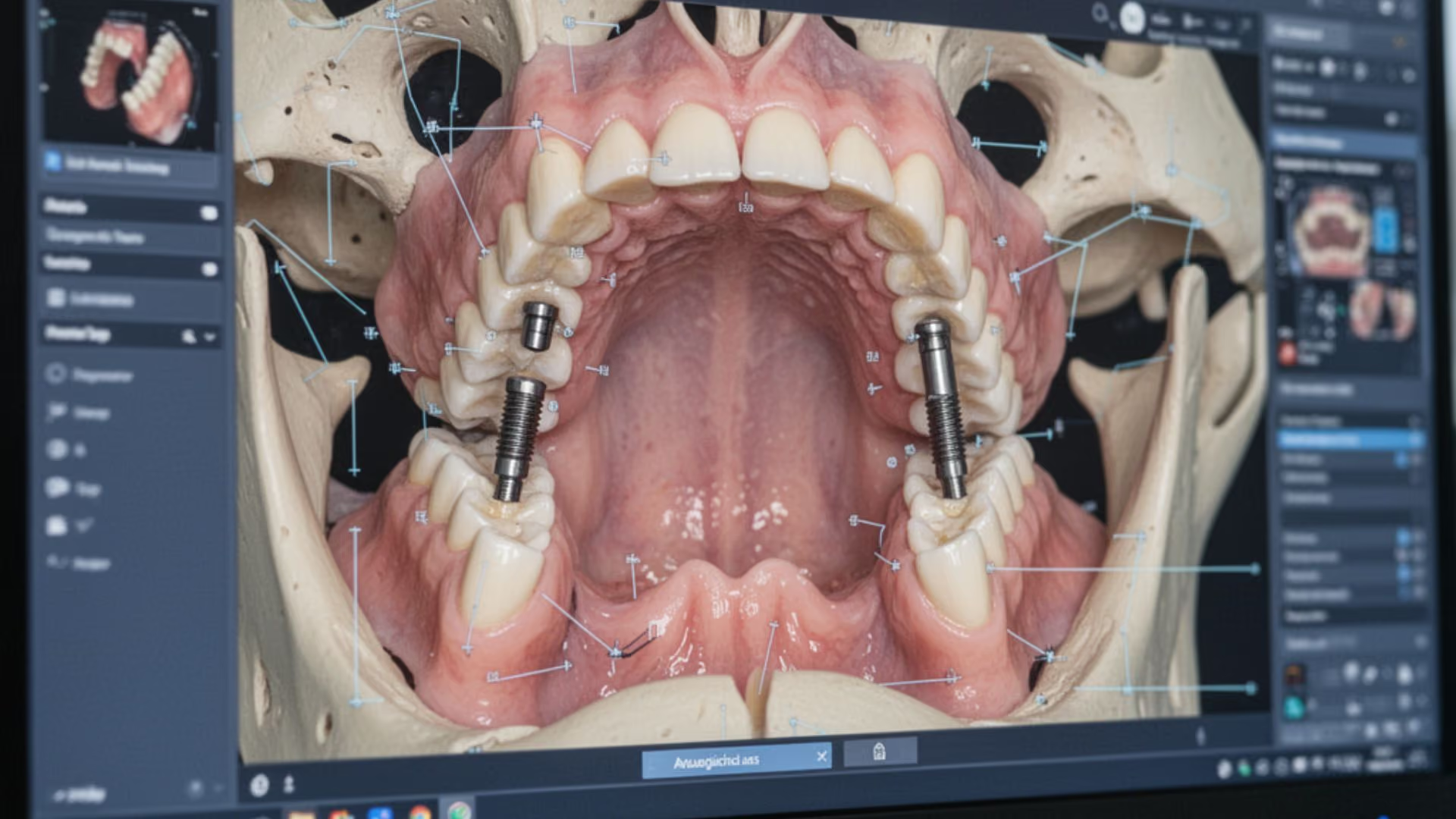
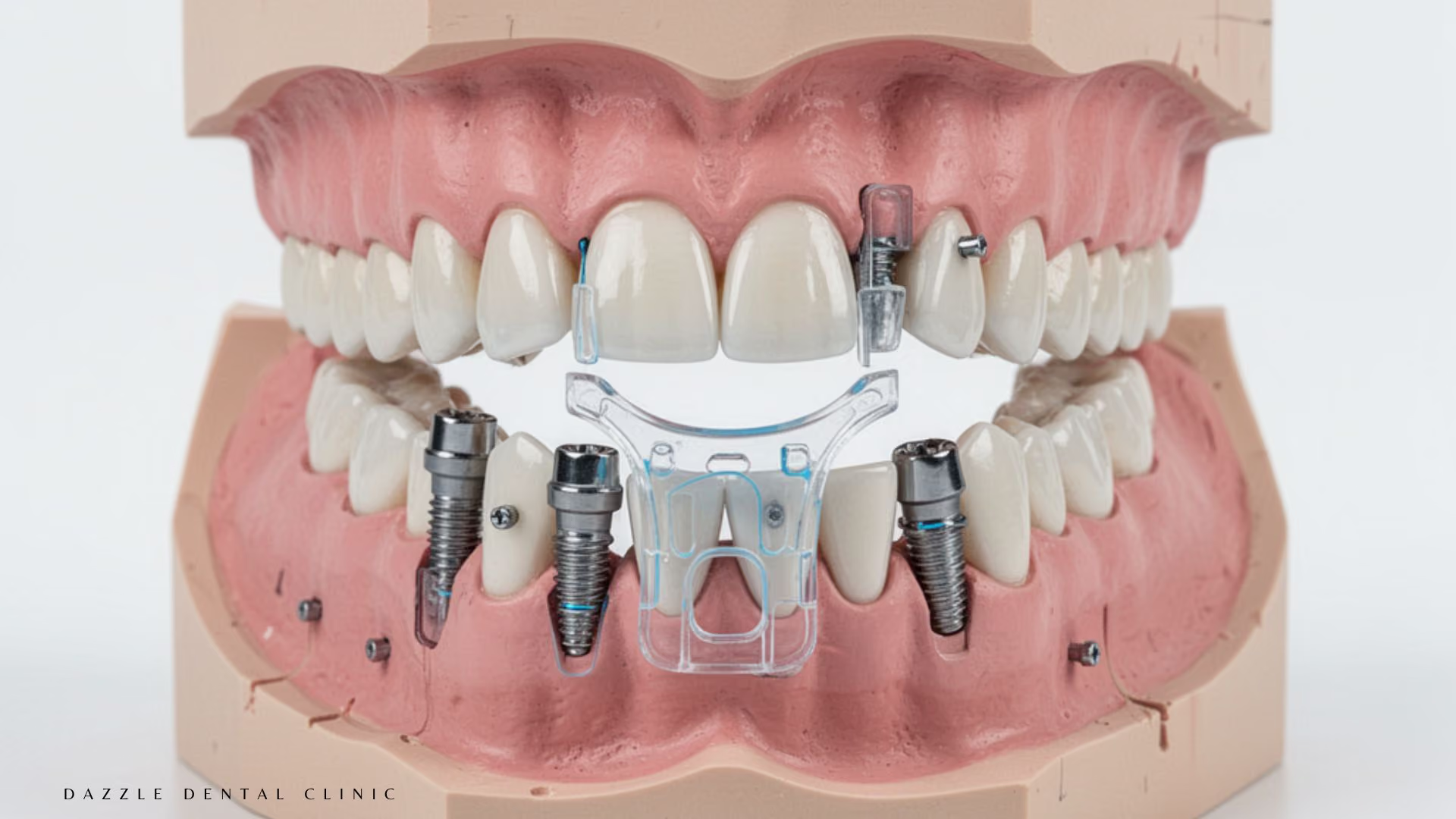
The posterior implants in All-on-4 are placed at angles of 30–45 degrees relative to the alveolar plane. This isn’t arbitrary. The angulation serves two purposes: it creates a longer antero-posterior spread — the distance between the front and back implant anchorage points — which directly reduces the cantilever length of the prosthesis and the bending forces transmitted to each implant. It also allows the implant to engage cortical bone in the anterior jaw, which is denser and more reliable than the trabecular bone found posteriorly, especially in patients with resorption.
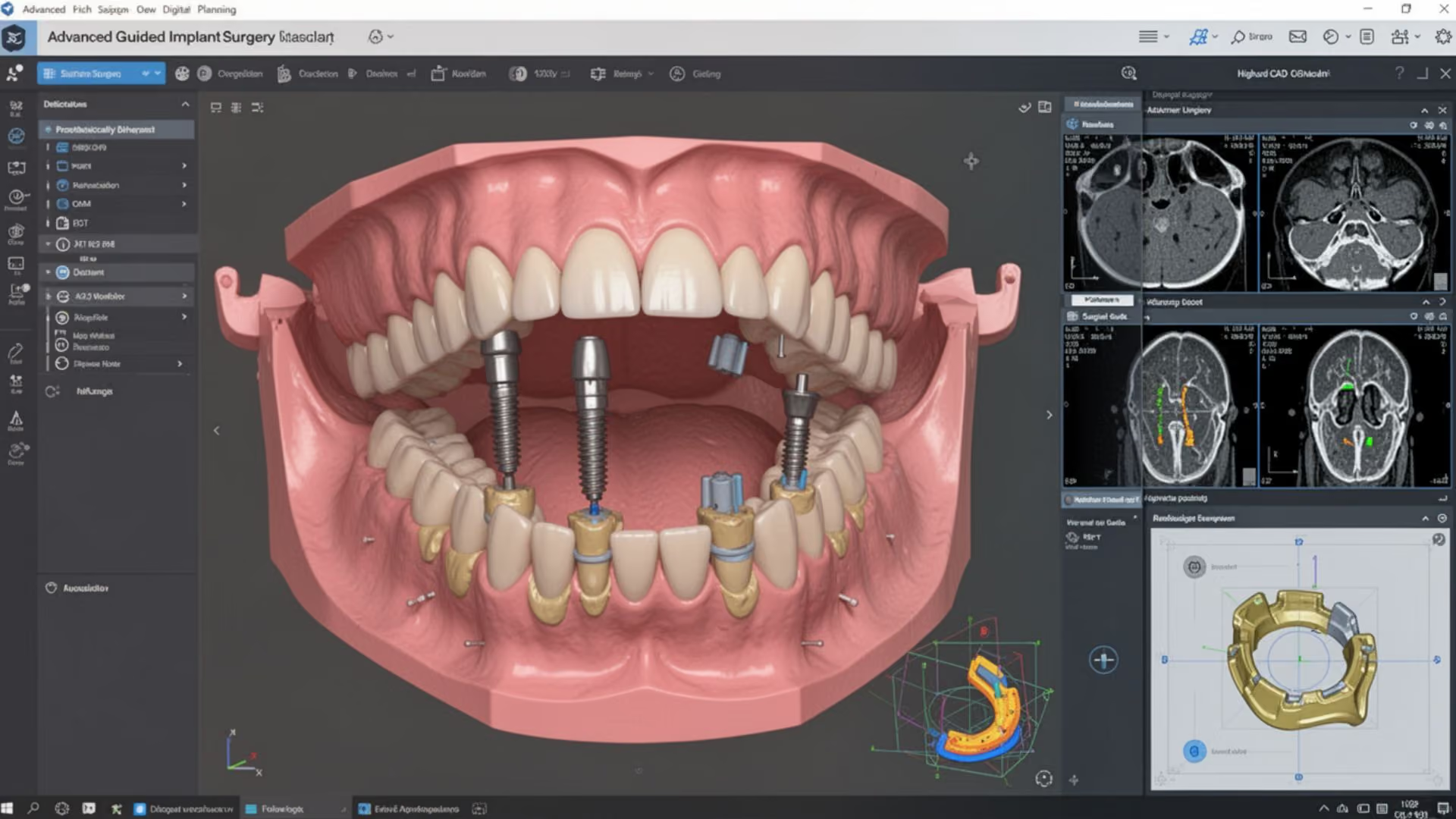
Precise angulation is not guesswork. At Dazzle, we use CBCT 3D imaging combined with surgical planning software to determine exact implant positions, depths, and angles for each patient before surgery begins. Guided surgical stents translate this virtual plan to the actual placement, reducing intraoperative deviation and protecting critical anatomical structures including the inferior alveolar nerve and maxillary sinus.
Primary Stability: The Non-Negotiable Threshold for Immediate Loading
Same-day loading — placing a functional prosthesis on the day of implant surgery — is one of the defining features of All-on-4. But it is only safe when implants achieve adequate primary stability at placement. Primary stability is the mechanical engagement between the implant threads and the bone at the moment of placement, measured in insertion torque (Ncm) and resonance frequency analysis (ISQ values).
The clinical threshold for immediate loading is generally 35 Ncm or higher insertion torque and ISQ values above 60–65. Below these thresholds, loading the implant before osseointegration is established risks micromotion at the implant interface, which disrupts bone-to-implant contact formation and can lead to fibrous encapsulation rather than osseointegration — effectively, implant failure.
At Dazzle, primary stability is measured intraoperatively for every implant. If a site does not meet the threshold, the loading protocol is modified accordingly. This is a clinical decision made in the moment — not a standard the patient hears about only when something goes wrong.
Implant System Selection: Why It Matters Beyond Brand Preference
The implant systems we use at Dazzle — Straumann (including Neodent), Nobel Biocare Nobel Active, and MegaGen AnyRidge — are selected for specific technical reasons, not simply reputation:
Straumann SLActive® surface: Hydrophilic surface treatment that accelerates osseointegration by shortening the critical integration window from 6–8 weeks to 3–4 weeks in appropriate cases. Clinically significant for patients with compromised healing.
Nobel Biocare Nobel Active: Tapered, aggressive thread design engineered specifically for high primary stability in both dense and compromised bone — making it well-suited for immediate loading protocols.
MegaGen AnyRidge: Variable thread pitch design that maintains bone quality during insertion and provides reliable stability in softer bone types, particularly useful in the posterior maxilla where bone density is frequently lower.
No single system is universally superior. System selection at Dazzle is case-specific — determined by bone density, loading protocol, and site characteristics assessed from the patient’s CBCT scan.
When Conventional Implants Aren’t Enough: Zygomatic and Pterygoid Options
For patients with severe maxillary bone loss where even angled All-on-4 implants cannot achieve adequate anchorage, zygomatic and pterygoid implants extend the available anchorage to the cheekbone and pterygoid plates. These are not experimental — they have 20+ years of published clinical data — but they require specialist training and pre-surgical planning beyond the standard All-on-4 protocol. Our team performs these procedures for patients who have been turned away elsewhere due to inadequate bone.
Prosthesis Design and In-House Fabrication
The prosthesis attached to All-on-4 implants is not simply a set of teeth. It is a load-bearing structure that must distribute occlusal forces across four to six implant connection points over years of function. Design decisions — cantilever length, occlusal material, cross-arch rigidity, access hole positioning — all affect long-term prosthetic and implant survival.
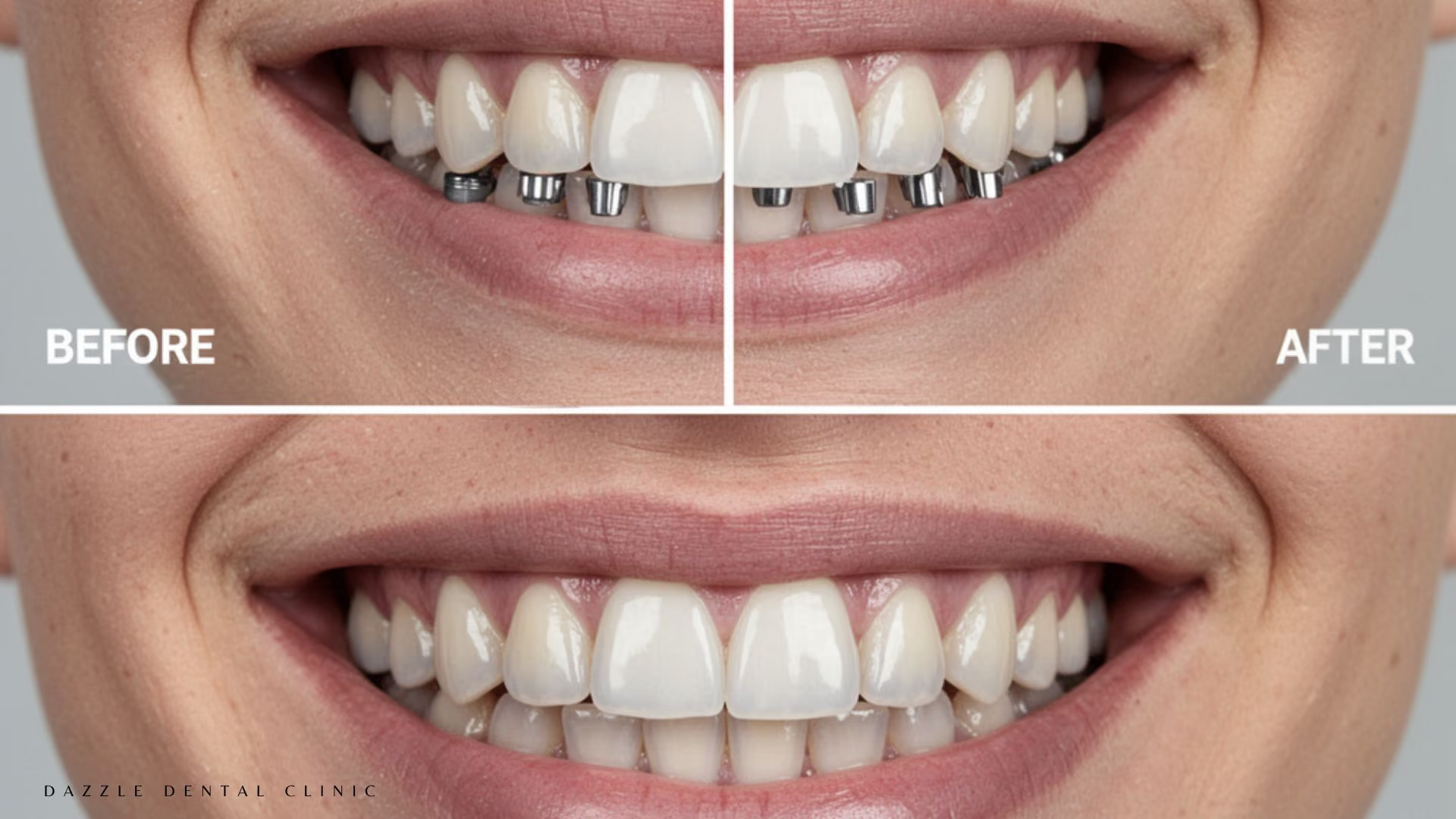
At Dazzle, all full-arch prostheses are fabricated in our in-house digital laboratory. Provisional prostheses are designed and placed the same day as surgery. Final prostheses are engineered from the patient’s scans and adjusted in direct collaboration between the clinician and technician. There is no external lab delay, no communication gap, and no compromise in fit precision from third-party fabrication.
Prosthesis material options — zirconia, PFM, or acrylic — are selected based on the patient’s occlusal load, aesthetic priorities, and budget. The material comparison guide explains the functional trade-offs of each in detail.
Post-Treatment Protocol
Technique determines initial success; maintenance determines long-term success. Post-implant care at Dazzle includes a structured follow-up schedule: two weeks post-surgery for suture review and soft tissue assessment, six weeks for osseointegration monitoring, three months for prosthesis evaluation and final restoration planning. After delivery of the final prosthesis, biannual professional maintenance appointments are recommended. Patients who grind receive custom nightguards to protect both the prosthesis and the implant-bone interface from parafunctional load.
FAQs
Q1: What makes Dazzle’s All-on-4 results more predictable than other clinics?
Planning precision (CBCT + guided surgery), intraoperative stability measurement before loading, proven implant systems with published long-term data, and in-house prosthetic fabrication. These aren’t marketing points — they are the specific variables that separate outcomes.
Q2: How do I know if my case qualifies for same-day teeth?
Immediate loading requires achieving minimum primary stability thresholds at implant placement. This is assessed intraoperatively. Most patients planning a routine All-on-4 case qualify; patients with very compromised bone density may require a staged protocol. We discuss this honestly at consultation rather than promising same-day results universally.
Q3: Which implant brand is best for All-on-4?
The correct answer depends on your bone density and loading protocol. We select implant systems based on your CBCT data, not brand preference. Straumann, Nobel Active, and MegaGen AnyRidge all have strong published outcomes for immediate loading — the right one for your case is determined at surgical planning.
Q4: How long does the final prosthesis last?
Zirconia full-arch prostheses typically last 15–20 years with appropriate maintenance and nocturnal protection. Acrylic provisional or final prostheses have a shorter functional lifespan of 8–12 years before replacement is likely needed. The implants themselves, if well-maintained, can function indefinitely.