.webp)

A dental cap — clinically called a crown — is a full-coverage restoration that encases a tooth from the gum line up, restoring its shape, size, strength, and appearance. It is the most definitive restorative option for teeth that are too damaged for a filling but do not need extraction. At Dazzle Dental Clinic, crowns are fabricated in the in-house digital laboratory from intraoral scan data, without external laboratory involvement.
When Is a Crown Needed?
A crown is clinically indicated when: a tooth has lost so much structure to decay, fracture, or wear that a filling cannot restore it reliably; a tooth has undergone root canal treatment and needs protection against posterior fracture; a tooth is cracked to the point where the crack propagates under biting forces; a tooth is being used as an abutment for a bridge; or an implant needs a prosthetic crown to replace a missing tooth.
A crown is not a cosmetic upgrade to a tooth that is restorable with a filling. Recommending a crown where a filling is clinically adequate is overtreatment. At Dazzle, the treatment plan specifies why a crown is the appropriate restoration, not just that it is needed.
Crown Materials: Which Is Used When
Monolithic zirconia (1000–1200 MPa): Standard for posterior crowns (molars, premolars) at Dazzle. Strongest all-ceramic option; same-day delivery available. Gradient multilayer zirconia provides good posterior aesthetics. The right choice for high-load sites, bruxism patients, and implant crowns in the posterior zone.
IPS E.max lithium disilicate (400 MPa): Standard for anterior crowns where translucency matters. Milled or pressed, both available. Aesthetically superior to zirconia in the anterior zone for shade matching and light transmission. The right choice for upper anterior teeth and implant crowns in the aesthetic zone. See our E.max vs feldspathic comparison for more detail on ceramic options.
Porcelain-fused-to-metal (PFM): A metal coping with porcelain overlaid. Strong; not biocompatible in patients with metal allergies. Aesthetic limitation: dark metal margin visible at gum line over years as recession occurs. Appropriate where cost is the primary constraint and the tooth is not in a visible aesthetic position. Not the first-choice material at Dazzle for teeth visible in the smile arc.
Full-cast metal: Used where maximum strength is needed and aesthetics are not a factor — typically non-visible molar areas in patients with very heavy bite forces. Essentially never fractures.
Same-Day Crowns at Dazzle: What the Process Involves
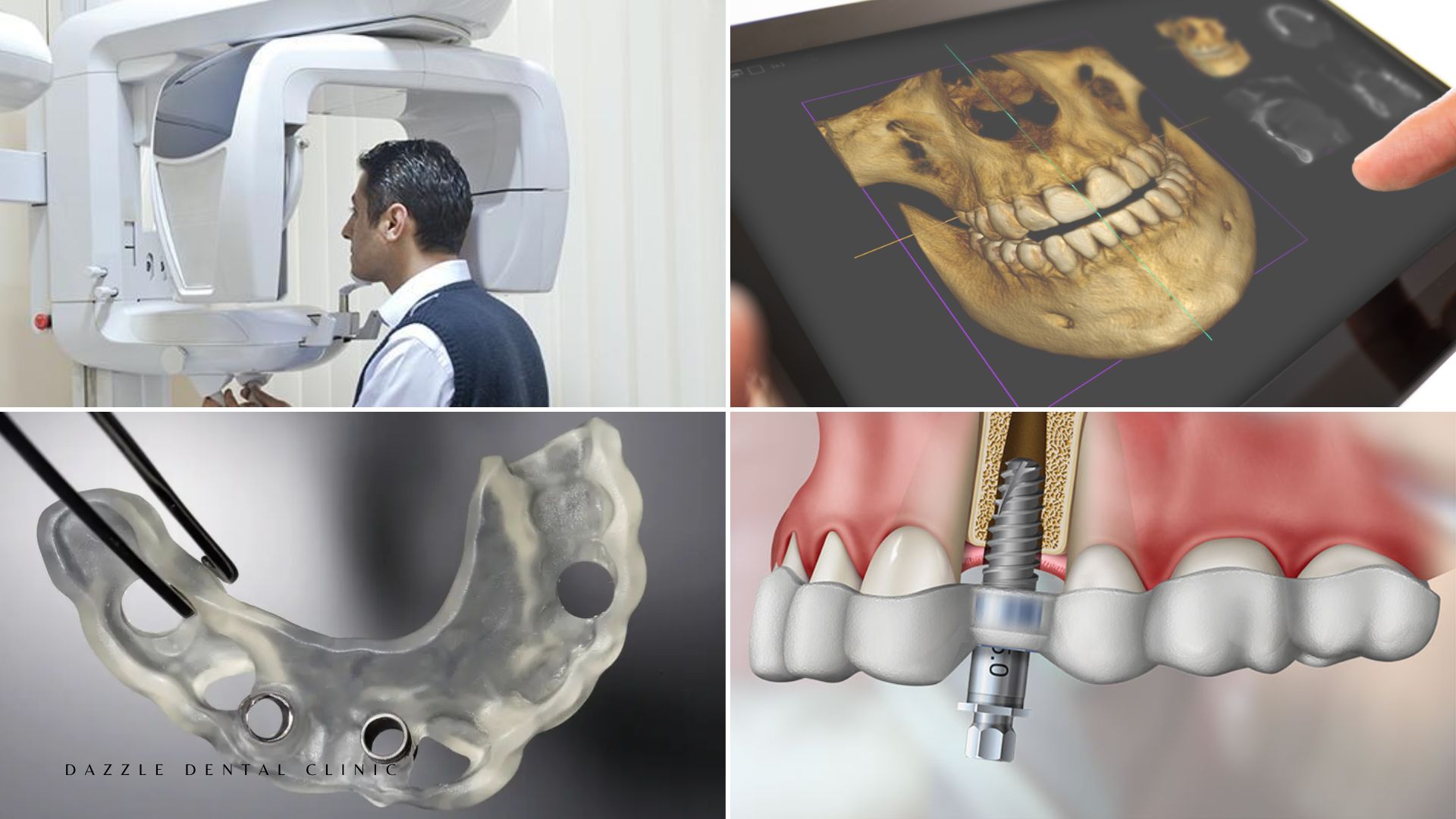
At Dazzle, same-day crown delivery is achievable for straightforward posterior zirconia cases using the following sequence: tooth preparation → intraoral scan (TRIOS 5, 2–4 minutes) → CAD design (technician reviews with clinician, 15–30 minutes) → milling (Amann Girrbach, 20–60 minutes) → sintering (Ivoclar Programat, 90–120 minutes) → glazing and characterisation → try-in and cementation. Total time from preparation to cementation: 3–4 hours in the same appointment.
For anterior crowns requiring precise shade matching with adjacent teeth: the shade characterisation step takes additional technician time and the crown is delivered the following morning rather than the same day.
For patients with a fixed departure schedule: the in-house laboratory eliminates the standard 10–14 day wait for external laboratory fabrication, compressing the entire preparation-to-delivery cycle into one or two days.
FAQs
Q1: How long does a dental crown last?
Monolithic zirconia crowns: 90–95% survival at 10 years; 15–20 years with good maintenance and hygiene. E.max crowns: similar longevity. PFM crowns: comparable structural survival but more frequent cosmetic remake for porcelain chipping or metal margin exposure. The most common reason for crown replacement is not fracture but loss of cement retention or new decay at the crown margin.
Q2: Will the crown match my other teeth?
Shade matching is one of the most technically demanding aspects of crown fabrication. At Dazzle, shade selection involves digital shade capture with the TRIOS scanner, supplemented by clinical shade assessment in natural light. The shade is confirmed by the clinician and the technician before fabrication. For critical anterior cases, a shade photograph is taken post-glazing and the crown is adjusted if necessary before cementation.
Q3: Is tooth preparation for a crown painful?
Preparation is performed under local anaesthesia. Patients feel pressure and vibration but not pain. After preparation, the tooth (if it still has a vital pulp) will be sensitive to cold and pressure until the permanent crown is cemented. A temporary crown is placed immediately after preparation to protect the tooth and manage sensitivity during the fabrication period.
Q4: What if my crown does not fit at the try-in?
The crown is adjusted or remade in the in-house laboratory. At Dazzle, adjustments are made on the same day at try-in. Significant fit problems (marginal gap, occlusal interference) are addressed by modifying the digital design and re-milling — a process that takes under an hour in most cases. This is only feasible with an in-house laboratory; external laboratory remakes require 1–2 additional weeks.